
REPORT
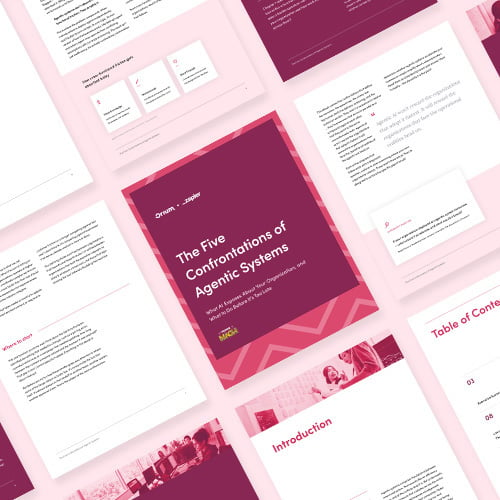
The Five Confrontations of Agentic Systems
What AI exposes about your organization— and what to do before it's too late.
Most AI pilots succeed. Most AI transformations don't. And most leaders are struggling to fix the gap.
Unlike previous tech innovation cycles, the gap isn't the technology itself or an organization’s ability to implement it. It’s everything the technology exposes when it starts to scale.
This report names five organizational pressures that agentic systems force to the surface: execution speed, cross-functional clarity, workforce capability, delivery discipline, and customer trust. Each one is a place where the organization's operating reality either supports agentic adoption or quietly defeats it.
Written by Everett Zufelt, VP Agentic Systems at Orium, with insights from Zapier, this is a diagnostic for leadership teams that have moved past "should we adopt AI" and are now asking "why isn't it working."

REPORT
The Five Confrontations of Agentic Systems
What AI exposes about your organization— and what to do before it's too late.
Most AI pilots succeed. Most AI transformations don't. And most leaders are struggling to fix the gap.
Unlike previous tech innovation cycles, the gap isn't the technology itself or an organization’s ability to implement it. It’s everything the technology exposes when it starts to scale.
This report names five organizational pressures that agentic systems force to the surface: execution speed, cross-functional clarity, workforce capability, delivery discipline, and customer trust. Each one is a place where the organization's operating reality either supports agentic adoption or quietly defeats it.
Written by Everett Zufelt, VP Agentic Systems at Orium, with insights from Zapier, this is a diagnostic for leadership teams that have moved past "should we adopt AI" and are now asking "why isn't it working."

Orium Agentic Strategy Canvas
Not sure where your organization stands on the agentic readiness spectrum? The Agentic Strategy Canvas gives leadership teams a practical starting point for turning diagnosis into action.

Guiding Shoppers With Smarter Answers and Comparisons
Piloting AI-driven Q&A and Compare Agents to deliver clarity, confidence, and better buying decisions.

What Agentic Systems Are Forcing Organizations to Confront
The rise of AI and the reshaping of competition, work, and customer expectations.