
WEBINAR ON-DEMAND
Embrace Business
Complexity With Real-time Inventory Data
Unlock the power of your entire retail operations

From endless aisle and BOPIS, to mixed carts and tap-to-pay, customers expect seamless omnichannel experiences. But without a single view of inventory availability, delivering on these expectations is tricky and can lead to missed sales.
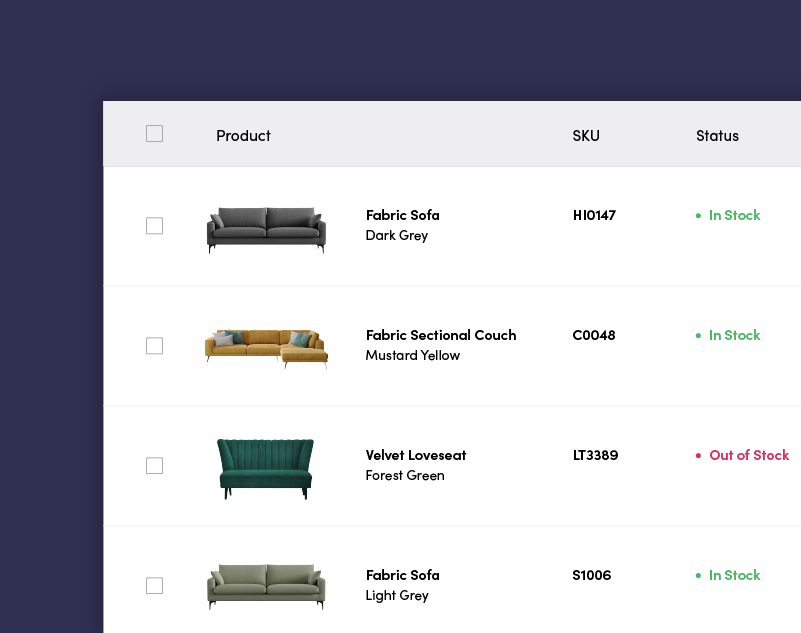
Referencing a case study of notable furniture retailer, Conn’s HomePlus, this webinar will explore how a consolidated inventory view plays a key role in unlocking the power of your brand’s retail operations.
You’ll Learn How:
- Accurate inventory visibility can help overcome the inherent challenges of a multi-variable product set, particularly for the in-store shopper
- Routing logic and network-driven fulfillment can optimize your supply chain for efficiency
- A real-time view of inventory empowers both associates and customers
Show Transcript
00:00:00:00 - 00:00:26:27
Jennifer Hileman (Orium)
All right, everyone. Thank you. Good afternoon, and welcome to our webinar Embracing Business Complexity with real-time Inventory Data. My name is Jennifer Hileman, and I am the head of retail platform strategy at Orium. I'm being joined today by some wonderful speakers who've taken time out of their busy schedules to join us. So thank you to all of them for that.
00:00:27:00 - 00:00:44:00
Today's format will begin with a brief presentation where our speakers will share their insights on this session's topic. Before we move into a panel discussion moderated by myself followed by a Q&A. If you have any questions as we move through the session, please feel free to submit them and they will be raised during the Q&A portion of the event as time allows.
00:00:44:02 - 00:00:56:20
I'll now hand it over to our speakers to introduce themselves, starting with Prasad. Hi, can everybody hear me?
00:00:56:22 - 00:01:17:26
Can everybody hear me? All right. Hey, this is Prasad. So I'm the VP of ecommerce engineering at Conn's HomePlus and accountable for all the technology behind construction and being at cost for about three years. And before that, I was leading the ecommerce practice at cognizant for eight years. And before that, I was heading the labs taught by Amazon product at Amazon.
00:01:17:28 - 00:01:24:17
Excited to be part of this conversation and share our learnings.
00:01:24:19 - 00:01:46:11
Awesome. Chad Hooker SVP, Global Channel Alliances here at Fluent Commerce. I'm a longtime water management player that started, back in like the 2005 time timeframe doing implementations. And since then, have held all kinds of positions across sales implementations. Running a consulting practice and now honored to be heading up a global alliances team here at Flint.
00:01:46:13 - 00:02:06:25
And just a bit about Fluent commerce. Contrary to our name, we are not a commerce platform. We do work very closely and integrate with many of the major commerce platforms. And additionally, what we do also spans well beyond order management. We we become an aggregator of all sources of supply, whether that's warehouses, DCs, dropship stores, 3PLs, whatever.
00:02:07:03 - 00:02:28:07
So it's that we put configurable rules around all of that inventory so that we service up the right image for inventory picture to the right source of demand, whether that's ecommerce stores, call centers, sales, sales reps in the field or our sales rep in the store. We express that configurable view of inventory and become a of the availability system of record and thus can provide promises on when and how inventory can be fulfilled.
00:02:28:15 - 00:02:45:07
Once the orders place, we become the orchestration hub to all those sources of demand. And then finally, if the items or items did not meet, the expectations of the customer, we orchestrate the return back to stock vendor or simply dispose of the items.
00:02:45:09 - 00:03:18:26
Wonderful. Thanks, Chad for that. My name is Jonathan Horemans and I'm the VP of North America at Mercaux. Mercaux is a platform that's really focused on the physical retail environment. So there's been, as you know, a lot of great innovations, and technology advancements on the commerce side. Our goal is to really help bring those into the physical world and make sure that they're truly unified so that customers have a single, seamless experience across all channels.
00:03:18:26 - 00:03:44:21
And obviously, I'll get more into what that actually looks like, but also excited and honored to be here. Thank you. All right. Thank you all again for taking your time to be with us today. So for the presentation portion of today's session will review the following topics embracing complexity, real-time inventory data, unlocking retail operations, and unique challenges.
00:03:44:24 - 00:04:08:27
Here at Orium, it's our perspective that embracing complexity is absolutely essential to the evolution of retail. What does this look like for the retailers and brands that we work with? This is a statement that we often refer to when working with our clients. We strongly believe that the best prepared brands in the future will focus their investments on systems enablers and accelerators that futureproof their retail technology, ensuring they can deliver the experience that customers will want and expect.
00:04:08:27 - 00:04:28:06
As retail continues to evolve. What we essentially mean by that statement is there's really no crystal ball to customer experience. We certainly are looking to, you know, work with the technologies that we have to enhance those customer experiences we know they want today. We're probably looking on the horizon to see what we think is coming as a trend and trying to get ahead and making sure we're staying up to date with those trends.
00:04:28:06 - 00:04:51:02
But at the end of the day, it's actually really hard to predict what really is going to happen. And there's things that will always be unexpected. And if we think about, you know, COVID and, you know, the sudden urgency on curbside and BOPIS and things that weren't necessarily expectations for retailers, what we really want to do with customers is make sure that we understand how to build technology infrastructure and pick the platforms that, yes, set us up to be successful today.
00:04:51:08 - 00:05:10:17
But also make sure that when you do need to make a quick pivot or you do want to change and adapt your customer experience, that technology is enabling you to do that and not blocking you or, you know, hopefully not putting you behind your competition. So when we're working with our clients to assess their business complexity in order to rightsize their technology investments, this is what we look at.
00:05:10:17 - 00:05:27:01
It's called our three C's. The first of that is complexity. So this is really about balancing, that sense of how do I futureproof and buy enough space for my business to grow with a technology platform without buying something that is well beyond the needs of what I actually really need to service today? What is it that makes your business complex?
00:05:27:01 - 00:05:46:07
It's really different for every retailer. Is it that you're a B2C and B2B? Is it that you have multiple countries and regions you're trying to service? Is that you've got a mix of, e-com that is doing fulfillment out of stores? What is it that makes your particular business complex? And then how do we make sure that we put those technology investments, centered around where we see that complexity?
00:05:46:07 - 00:06:07:01
So that's a big piece, restaurant complexity for capabilities. What we're looking to understand is not only the capabilities of the technology that you have and you're looking to purchase, but the technology. But the story, the, the people you have in your organization and what your organization is designed to support. So when we think about the technology side of that, thinking about things like, what can your systems do today?
00:06:07:01 - 00:06:24:19
What can they not do? What are you doing in a manual workaround that would be great to be automated or brought into a normal, operating platform. If you're looking at building and or, purchasing a new platform, what is it that you need it to serve? And how do you make sure you actually use every nook and cranny of that technology so you're maximizing your ROI?
00:06:24:24 - 00:06:44:28
How do you think about things like overlapping features when you've got multiple platforms as part of your stack on the people and organization side, what does it mean for you as a company to take on a new technology project? Is it that you actually have, quite a number of developers in-house and you do a lot of that work in-house and you can support it, and you want to build on top of something that's a great foundation.
00:06:45:00 - 00:07:02:23
Or do you really just have a couple of it people who are also provisioning laptops that need to be able to support this? And so you need a tool that is really a lot more turnkey and self-supporting. So, understanding what you're looking to accomplish with the capabilities of your organization is also very important when thinking about how you take on complexity as a business.
00:07:02:25 - 00:07:19:27
The third of this is change management. I think anyone who's done a retail, implementation will tell you that the change management part is the hardest part. I think my solution architect probably disagrees with that perspective. But certainly, you know, putting the platform in is one thing, but actually giving the right consideration to who are the stakeholders?
00:07:19:27 - 00:07:45:25
It's not just your customers, it's associates, it's end users inside your business. It's that person who's paying commission on payroll in a very specific way that they've been doing for ten years. So how do you actually think about all of those processes that are going to be impacted, early enough so that when you're actually implementing and bringing in new platforms, that you've taken those considerations and they don't become later barriers to adoptions or places where you see your projects struggle to be successful.
00:07:45:28 - 00:08:10:09
Oops, oops. Go back slide. So, when we're, ultimately when we think about the future of retail technology strategy, this is the, the statement is really the goal that we're trying to work towards that. So technology should be an enabler of a retailer's vision, not the limitation they design experiences from around. While the future of omnichannel may be hard to predict, we believe it's possible to create a technology roadmap that allows retailers to adapt as needed.
00:08:10:11 - 00:08:24:18
So this is essentially that idea that you don't have the crystal ball. And what often happens is you take on a technology platform or you have an idea for customer experience, and your first question is, can our system do that? And if we weren't going to do it in the system, what would the workaround look like? And how could we actually make that happen?
00:08:24:18 - 00:08:38:04
And and what we'd love to have I don't think anyone is there yet. And we would, you know, we're all kind of working towards this goal, I think, in this virtual room. Trying to bring this forward is I'd love to say this is what I want to offer my customers as an experience, and the technology can meet me there.
00:08:38:05 - 00:08:55:04
It's not something that I need to build a workaround for or compromise on, because my technology can't help me accomplish that. So that's certainly what we're looking at when we talk about how do you embrace complexity into your business and, and build the right foundations that set you up to be successful? And with that, I'll pass it to Chad to talk about real-time data.
00:08:55:07 - 00:09:17:21
Perfect. Thanks, Jennifer. So nationally, over the last few years, we've really come to understand new ideas about inventory, one that the flow of infinite inventory cannot be assumed or cannot be assumed to be consistent and visibility into the location, quantity and promise dates are critical. I really feel that this that, it inventory management has become the, the latest battleground of customer experience.
00:09:17:28 - 00:09:37:23
Oftentimes when we start the journey with a new client, we find out that poor inventory information, and inventory process manifests itself into a higher order problem that manifests itself into our customer experience problem. A recent report by McKinsey sheds a little bit of light on this. And they feel that companies are in danger of missing what they're calling the next ecommerce wave.
00:09:38:02 - 00:09:58:14
ecommerce sales of naturally doubled in the last five years and expect to double again by 2026. There's real market pressure into getting inventory, right. ecommerce is naturally changing, becoming more complex, and it's on an unpredictable path. Consumers are changing in the way that they buy and expect. Their expectations are extremely sky high.
00:09:58:22 - 00:10:19:02
Plus, we're all feeling the economic volatility impacts on businesses and people. You've got to get things right. Or a new or an old competitor will, one who's figured out how to make their technology scale and work for them. Let's now take a just a brief look into how how that complexity manifests itself.
00:10:19:04 - 00:10:39:17
In the early days of ecommerce. It was a very linear path. Orders were collected on a website passed off to an ERP to ship from a warehouse. This worked okay. Because a lot of this looked like an old school catalog business as customer expectations around how, when and where they wanted to buy evolved. The complexity became much to great for this two tier approach.
00:10:39:19 - 00:11:12:09
The ERP was never designed to allow companies to rapidly respond to customer demands or ever changing demands from the business on how to serve those customers. Even something that Jennifer mentioned a minute ago, that's considered basic, which is buy online, pick up in store or even our curbside, was way too much for that. The single tier model or, heaven forbid, the need to service up, the inventory to third party marketplaces and then apply buffers and exclusions on top of that to prioritize the inventory through one selling channel or another.
00:11:12:12 - 00:11:31:04
What we've seen over and over with our clients is that all the complexity that we talked about in the previous slide really gets hard and harmonized and simplified and fluent. As I mentioned, we ingest all of the inventory, from all the sources of supply. We apply rules to it and then service it, back up the inventory, back up to the specific source of demand.
00:11:31:10 - 00:11:57:27
We do this by having a highly scalable and configurable rules and rules engine and workflow. And then as, as time has evolved a bit. Mid-last year we had a bit of an moment. We were speaking to, to clients that really wanted to and really needed to solve this inventory problem immediately. So what we did is we pulled out the inventory bit and made it a standalone that we call big inventory.
00:11:57:29 - 00:12:16:25
And working with some of our other software partners, we discovered there's tremendous value to those other systems to be more inventory aware and to have that inventory information more timely and more accurate. We found that search platforms benefit greatly from having more real-time data to present items that are actually in stock in the search results. The same goes for personalization.
00:12:16:25 - 00:12:41:05
Why would you recommend an item that you can't actually fulfill? For Google and Social, as we were finding from our clients that many of those companies were spending big money on promoting the items that were not even in stock. We've seen similar benefits with PIM and merchandising and others, and you'll hear from Jonathan a bit about how a world class in-store application like our coach can benefit from more accurate and timely information and inventory information.
00:12:41:08 - 00:13:02:05
For our clients, we've seen really three categories of real world results. In under selling, over selling and fulfillment optimization. If you're under selling, you're not com. What that means is you're not confident in your inventory. So you're buffering and hoarding inventory and missing out on lost sales. One of our clients, after implementing client, saw an increase of $61 million a year in revenue.
00:13:02:11 - 00:13:32:00
Another increased online sales by 166%. If you're overselling, you're in the worst possible scenario. Not only are you having to cancel orders and loss of revenue, but you're also increasing call center costs and customer care costs. And worst of all, you're upsetting customers that will likely never return. Some of our other customers have seen great gains in simply just using the inventory that is in the most optimal position to satisfy the promises made to the customer, while aligning with the best operational efficiency of the business.
00:13:32:02 - 00:14:01:14
Hopefully, this helps paint a picture of what accurate inventory can unlock across all touchpoints. And now I'll hand it over to Jonathan where he can really zero in on what you want. Getting it right does for the in-store experience. Great. Thank you Chad. So if we go to this first slide here, I think what we see is that inventory really is the conduit and the key pillar, and ensuring that retailers are on their journey for this convergence with online and offline.
00:14:01:19 - 00:14:26:23
It really starts with inventory. Because if your inventories are shared, if you have full overview and ability to order products, regardless of where the journey starts and where the journey finishes, then you're also starting to actually understand the full customer journey. Because as we know today, those are not fully linear. Right. I might be researching online purchasing and store or vice versa.
00:14:26:25 - 00:14:54:12
And if that inventory isn't readily available by store colleagues and understanding what that customer is interested in or helping them get, that those journeys become very disconnected. And so it starts with the product. It gets into customer. And then of course, you want to enable seamless checkout regardless of where that product is. I could be paying for something in the store, and that could be fulfilled from the late from the nearest distribution center.
00:14:54:12 - 00:15:25:25
It could be fulfilled from another store. It shouldn't matter. All of these things should be really seamless, across your channel. So if you look at the next slide, this is when we start to understand how it can really actually enhance the customer experience in the physical retail environment. And if I just pause here for a second, once you have full overview of inventory, that's when your store colleagues can turn into not just helping them checkout but with pre checkout experience.
00:15:25:25 - 00:15:49:11
Elements of do I have this in store. Do I have it at another store? What can you tell me about this product? What kind of inspirational content can you bring in. What products go well with this that are also readily available? We call that assisted selling an omni channel, you know, very closely linked to that is fulfilling those interests of okay, it is in store or it's available from another store.
00:15:49:11 - 00:16:16:13
How do I reserve it there? How do I ship it to a customer? And then the customer pillar comes in naturally after that of I've now identified what product is customers interested in now that have satisfied that need. How do I get to know this customer a little bit? Are they a regular customer of ours? Is there information about their previous purchase history that I can leverage in the store, and potentially even reach out to them once they've left?
00:16:16:16 - 00:16:39:18
Are solutions are not only between store colleagues and customers, but if you click further, Jennifer, you can also see that's the solutions that we unlock for the customers themselves. Because every customer has a different preference and a different journey. But again, the inventory is fundamental to that because I might want to be serving myself and understand is this available in store?
00:16:39:18 - 00:17:15:01
And if I can't find anyone, how am I unlocking my personal cell phone device to be able to do a stock check to request things to be brought to me on the shop floor, or maybe even in the changing room. And so what you see is this concept of universal baskets. If we if we click further, that the product should really follow the customer, regardless of where initial journey starts and where it maybe takes place or actually finishes, right, that product needs to follow the journey.
00:17:15:04 - 00:17:41:04
And where we've done this successfully is with stadium goods. So next slide there a high end sneaker resale platform where inventory is very important to them because every pair of sneakers is a unique skill. So if they aren't fully clear as to where that shoe is, they're not able to surface that to their customers. And where they started with more Co was around product.
00:17:41:07 - 00:18:07:17
Help me get bring that visibility to my store colleagues. Help me actually request those shoes to be brought to a customer without having to walk away. Keep their engagement high. Help serve their needs right away so then I can get into other value, add elements of recommendation, and of course provide some checkout. And that's where we are today with stadium goods where we fulfill their full end to end customer experience.
00:18:07:20 - 00:18:19:23
Everything from where's the product, getting the product to them to helping them pay for that seamlessly. Regardless of where that product is located.
00:18:19:26 - 00:18:25:23
Thank you.
00:18:25:25 - 00:18:50:05
Thanks, Jonathan. So let me start off with a context of, what we do at Conn's. We have a $1.5 billion publicly listed retailer, and, we, you know, also a lender where we finance 80% of our business. We also have a footprint in about 15 states in the southern part of the US. We have a couple of hundred stores.
00:18:50:21 - 00:19:13:00
And we itself from a dozen DCs and are endless. Aisle is supported by a handful of, dropship vendors, and, we mainly sell appliances and furniture, most of which are heavy items that are not parcel shipped but delivered on our own trucks. And, the key differentiator is we can, deliver 80% of our inventory the next day.
00:19:13:17 - 00:19:35:07
So with that context, let me jump into, the more broader problem of, you know, what's the challenge? You know, that we as counsel and, you know, I also wear the macro lens hat. So as part of the macro lens, you know, we're seeing it a different, you know, retailers. What is this challenge that we are talking about now.
00:19:35:07 - 00:20:01:22
Most now not everybody have has all of these challenges. But again, anything we talk about here, any solution is, you know, has to be tailored for that particular retailer because everybody is unique. And it there's, there's no like one size fits all. So I want to disclaim that going upfront. But so you on one hand you have, you know, store inventory in stores.
00:20:01:23 - 00:20:24:28
You have inventory indexes, which is the bottom part of the slide, and you have inventory coming from your vendors. And then on the other hand, you need to expose this on the different channels. Now, even on the web pages alone, when you go to, web search. And this goes back to what Chad was saying a moment ago, you know, we're spending marketing dollars on ads where we didn't even have the product in stock.
00:20:24:28 - 00:20:53:22
So you want to make sure your feeds to Google and to other search engines are, you know, only for those products that you have in stock and you need to, basically optimize for that. Similarly, site search, which you know, is another piece where, we need to expose the right kind of products. And then as you get into the journey on to our site, pimp cart and checkout each page, the need is slightly different.
00:20:53:22 - 00:21:17:20
Even though you're exposing inventory, for example, you know, we have simple skills. We have variations to that, like a fridge is available in multiple colors, sizes and all that. You know, soft bundles where you can pick and choose the different parts of the bundle. You have hard bundles, you have collections where we take a combination of products from what we sell, along with, let's say, you know, we sell a sofa and then we sell pillows from the dropship vendor.
00:21:17:23 - 00:21:36:09
You know, we want the customer to be able to mix and match and create a living room for them. And we have accessories that go with certain pages. And that's where we, you know, try to increase our product value. And then of course, the warranty. So the way you this is all ties back to the inventory is when we show these packages.
00:21:36:09 - 00:21:55:07
It's a rather complex problem. You want to do that on a page which is performant as well. You can't keep making all these calls and this is going to slow down the page. So if you can go to the next slide, it basically shows you the what we have done here, which kind of solved, you know, a lot of the problems.
00:21:55:07 - 00:22:15:15
I wouldn't say we have solve all the problems. I don't think we will ever get to solving all the problems with the change changes happening in the industry and so many new requirements, the six forces of change that Chad talked about, which are always in play and, so what we did is we created a single view of inventory repository in near real-time.
00:22:15:17 - 00:22:42:21
And then we created, from which, you know, we send feeds directly to the web search and site search. And we created an available to promise service, which is piloting these pages, which can, you know, which is, you know, flexible enough to be able to take either one product or a multiple set of products which are, you know, given by the recommendation engine to say on this page, you know, here are the accessories, here are the bundles that go with it and all that.
00:22:42:21 - 00:23:09:27
So we make a collection of that and then send it all and get back in one cart. So that's kind of in a nutshell. What we, how we kind of solve this problem. And, and, with that, I kind of open it up to the. Oh, that's great. Thank you. Thank you, everybody, for your presentations. Maybe as we transition into the discussion in the panel, Prasad, you talked about how everything is not one size fits all.
00:23:09:27 - 00:23:48:14
And that's certainly absolutely true in all of retail. What what are the unique complexities and challenges around your business, knowing that you're working around furniture and appliances and kind of a really unique segment of retail? So, so as I said, you know, the unique complexities here was that how do we increase? You know, LV average order value by, you know, combining all these bundles of bundles, collections and all that and, and the approach that I was mentioning about is, you know, talks about some of these unique, challenges, given that we've got all these different combinations.
00:23:48:24 - 00:24:12:15
And once we implemented this, we noticed that we have we saw a high double digit growth in online revenues and more than half of the cancellations, as well as reduced cost of agents. And the other important thing here is that it has a reputation thing as well, because, you know, if we lose a customer, if we don't serve a customer, then most likely they are going to come back like Jackson.
00:24:12:17 - 00:24:34:29
Yeah, absolutely. Absolutely. There we go. Just going to move the presentation there and make it a bit easier to see our, our beautiful speakers. So, Chad, maybe a question for you then, you know, what kind of customer experiences are really unlocked or maybe supercharged when they're actually powered by accurate real-time inventory data versus, you know, an overnight update feed or a batch update data?
00:24:35:01 - 00:24:59:12
Yeah, I think that's great because I think, you know, we can test it on that around this, this topic on the panel, I think it really comes down to creating that customer delight versus the customer disappointment. Right. And if you can, if you can provide accurate information like, like what I was saying about it, the pop art checkout so that, right expectations set and the right, the right product with the right expectations.
00:25:00:08 - 00:25:20:14
You can really start to unlock that customer loyalty and the lifetime value of the customer. And then, when you can accurately make promises about that inventory and how and when and where that inventory is going to be fulfilled, and then and then be able to actually fill in those promises. You never really know how important that item is to the customer.
00:25:20:14 - 00:25:53:13
It could be could be something that they are just buying. It's not really an immediate need, or it could be something that absolutely needed by a certain day and missing that day. Can can have catastrophic next to that customer. And I think, you know, just looking at it from that, that customer delight. And then, you know, as Jonathan was saying, all of the things that can be unlocked in the store with real-time inventory and being able to serve the customer in many unique, different ways, like, like what we're doing with the, the, the way that they're handling the baskets and transferring those around and being able to really immerse the
00:25:53:13 - 00:26:20:28
customer in that in-store experience instead of just, a walk in, grab and go scenario. But bring them, bring them in into the fold and give them that access to the inventory, you start to really unlock those experiences and again, just build that customer delight versus the customer's point. Yeah, I think that absolutely makes sense. And certainly, you know, as you're thinking about all these experiences are building and I know I think, Jonathan, you see a lot of the similar conversations we have is that there's retailers who really have great ideas on customer experience.
00:26:21:06 - 00:26:42:28
They have internal tech capabilities. So I'm just going to build it myself. Right. It's it's easy enough for me to build a digital fitting room. I'm going to I'm going to put some innovation time aside in my team to kind of build that. And so when retailers you're talking to are thinking about build versus buy, you know, what is what is worth the build, what is, you know, valuable to buy, how to how should they think about that approach when they're building their customer experiences.
00:26:43:01 - 00:27:06:29
But time with questions. Thank you. Build versus buy I think for a retailer, the way that you started off the webinar today, the most important thing is trying to futureproof your business as much as possible and focus on the core capability of why you're in business, whether that's selling T-shirts or barbecues or beds or what have you, and building the connections and relationships with your customers.
00:27:08:00 - 00:27:31:13
The way that customer demands and expectations are changing so quickly, you may have the capabilities, the brain power to build some of these things, but it's not just about being able to build them. It's is it being built quick enough. And once you build them, how great are they at interacting with all these other different capabilities.
00:27:31:15 - 00:27:58:27
And so what we see is time and time again is siloed solutions. A lot of these things aren't built based on the MACH principle and therefore sharing of information, sharing of inventory, sharing of customer data, having those baskets follow customers, having them follow across channels. It doesn't work. The most simple example is we've seen a lot of people build a digital fitting room like, well, customers in the store where it's a pain point.
00:27:58:27 - 00:28:21:07
I'm in the fitting room. How do I ask for another product? And a simple solution of pinging a store colleague to grab something from the shop floor? Maybe in the warehouse is not that hard, but what can you do from there? What if that product isn't there? How do I seamlessly look at my inventory across my entire estate?
00:28:21:10 - 00:28:45:19
How do I share that basket or interest with commerce? How do I enable a seamless checkout? How do I say that to a customer profile? All seamlessly? And I think that's the biggest challenge with building is people think in a siloed approach. And it's really hard to from the beginning, understand all of the different interactions and integrations that it will need to deal with.
00:28:45:22 - 00:29:00:19
I think certainly we've seen examples where somebody decides to try to build, an entire platform because they're solving for one use case. They've got a specific use case or an edge use case, or every retailer thinks all their cases are edge use case, but you've got your edge use case. You're trying it. So I'm just going to build it because I want to solve that one piece.
00:29:00:19 - 00:29:20:26
And I think your point some of this stuff that happens around integration and long term future proofing and being built on your MACH principles, that allows you to actually, have all these systems talking to each other in a way that gets the data to the right place. Is already done really well by platforms. And so it's a matter of with your really, great tech capabilities, can you build on top up?
00:29:20:26 - 00:29:35:29
How do you build the right tech, pick the right technology that you can still build from or extend from so that you're spending your time doing that instead of spending your time figuring out, yeah, how do I now that I built this, this digital sitting room? Wait, I wish it did. These five things. And now I got to go back and try to go back into the foundation of my technology.
00:29:35:29 - 00:29:51:18
And that's a really complicated thing to do. And, and certainly, you know, part of the journey of being flexible is the ability to swap out technologies that start to make sense for you as you change your business, you change your model. And that's gets really hard to do when you've sunk a lot of cost of time and investment in building some of that yourself.
00:29:51:18 - 00:30:06:25
And it doesn't quite talk to all your other systems the way you'd like it to. So, certainly that's a weak center in our world. Maybe to, to kind of all the group and maybe you'll, you'll kick us off and, you know, in the world of specialty retail and as I'm talking about, every retailer thinks their use cases are unique to them.
00:30:06:25 - 00:30:25:15
You know, how do you assess various technology solutions to make sure they can actually serve the unique edge cases and needs of your business? Yeah. So great question again. I mean, I want to go back to what you said in the beginning. Jennifer. You know, one of the things you said is that struck a chord with me is technology should be an enabler, not a limitation.
00:30:25:17 - 00:30:47:11
Right. And so that's that's one lens. And the other thing that Jonathan was talking about is, you know, how do I make sure that across whether I walk into the store or I click into the site or I call into the, you know, call center, I should be getting a seamless experience, right? So those are the overarching kind of requirements on one hand.
00:30:47:14 - 00:31:13:07
On the other hand, if you if you take a look at the marketing technology landscape, what's happening in the last ten years is that every year a thousand new products are coming on, you know, at the meeting. So the, the available set of products and it's very difficult to keep up with, with them. And when they're trying to make a new purchase, purchase of a new technological investment, there are so many choices and there's so much confusion.
00:31:13:10 - 00:31:40:01
Right. And so that is where I see the MACH principles really holding an our ground is that let us solve and what I call the, you know, outcome based development. Let us focus on a certain outcome and what whatever that is, you want to improve your conversion. You want to improve your, you know, basket, you know, size, whatever that, you know, goal to have focus on that and do the minimal amount of investment on it.
00:31:40:01 - 00:32:03:27
Because I know for sure in three years, whatever I do today, there's a new technology that's coming along and especially now, I mean, we've all seen how ChatGPT and bad and all these things are kind of completely upending everything that we know about stuff. And so in three years, who knows what happened. So let's not make major investments so that's that's one lens that I look at.
00:32:03:29 - 00:32:26:05
And then as I said, the outcome based development. How does this impact the customer experience overall? How does it, change my, you know, operations teams experience? And I'm going to make it easier for them to run the site right. How does it fit into my overall ecosystem of tools, and systems and, and then cost.
00:32:26:05 - 00:32:53:09
And then the last thing I would, look at is, can I use this thing in doing every test, or do I go big bang right now? If a tool needs a big bang change and that's a that's a very risky thing in today's world. I mean, any technology that I'm trying to bring in, in fact, one of the things that costs what we do is we do an A/B test and, and are we easy to make if we are bringing out any like we brought in an air based search tool.
00:32:53:12 - 00:33:19:16
We initially did an A/B test with two vendors sending splitting our traffic, you know, to both of them and measuring the, you know, revenue per visitor metric. So so that's kind of how we bring them on board. And so that's another lens we should look at. And, and those I think would be how, those are the key factors of how we would go about deciding on what technology to use.
00:33:19:18 - 00:33:50:23
But great question. Right, Jonathan. Chad, have you had a similar perspective, different perspectives? Yeah, I think, you know, I agree wholeheartedly with this. I think the world of, the monolithic have a really thick software project. Ergon. Right. It's it's really what I would say is the MACH principles book principles being able to identify discrete needs and find discrete capabilities to apply to those needs and not and getting away and staying away from the big things, as you said.
00:33:50:23 - 00:34:15:16
Right. Because that's risky. Nobody wants to be in that camp. And being able to siphon off and identify use cases that need to be addressed. And, and what we see the most success in is like when, when customers maybe, maybe do an RFI just to understand the market, but they get away from the idea, the whole legacy ideas of a big, long, drawn out RFP and creating an, an amazingly long list of a spreadsheet that everybody fills out.
00:34:15:18 - 00:34:49:24
Get away from that and go to, I show me versus tell me scenario where you identify those use cases, have the vendors come in and demonstrate those use cases, and then after that, if you still need more validation, whittle it down. And maybe if it's if it's that important to you, the business use that as an opportunity to take that budget that would have been thrown in an RFP process and somebody to manage that for you and use that with maybe, maybe one of the vendors partners to be able to run a pocket, bring in a really the folks in that, to dive deep into a certain area and learn a tremendous
00:34:49:24 - 00:35:04:29
amount more about the company and the culture, the tech, the product, how it fits in and, and really use that as an agile way of identifying and assessing the tech that comes in.
00:35:05:01 - 00:35:35:05
Right. Well, as we think about future proofing the technology, you know, how do you make sure that as a retailer, I'm if I'm a retailer and I want to start thinking further than my, you know, next year's budget, what do I need to be thinking about to actually be position, to pivot quickly? What are things that they should be looking for when they're looking for a new technology solution, or looking for a way to plan their technology strategy that makes sure that they're ready for all those new customer experiences that ChatGPT is going to throw our way and make a norm for retail.
00:35:35:08 - 00:36:01:29
I mean, I think it's very high level, right? It's it's why all of us are here today. We adhere to these principles. And that for me, adhering to that just allows retailers to more and more futureproof their business. From an architecture perspective, and as you said, we don't know what's going to come next. We don't know exactly how chat GPT is going to influence in-store or customer service.
00:36:02:11 - 00:36:28:06
But being able to absorb those new technologies quickly. Also, to Chad's point, if you're doing an RFP and you're mapping things out for the next three years in light of these developments, that seems a little silly. Because things can change and fundamentally change that quickly. There's actually recently an event where, a CTO said the CTO role used to be, give me the five year roadmap.
00:36:28:09 - 00:36:43:13
That was the primary function of the CTO. And he's like, now I'd be very, like, surprised if I could give you something maybe into two years, like maybe I could give you a two year view. But there's like anyone who thinks they can have a five year roadmap. That is a proper strategy at the rate of change right now would be completely kidding themselves.
00:36:43:15 - 00:37:11:04
So I think that's true. Any other, thoughts on how to best prepare position your retailer to be agile for future innovations? So one of the things I would like to add is, you know, you have and experimentation. So when you have your website, if you can afford it and if you are into this, you know, have a small sliver of your technology stack available for experiments because experimentation is the way to go.
00:37:11:04 - 00:37:50:22
And, you know, that would enable you to launch rapidly and or fail fast, figure out what's working, what's not, and then if it works on that stack, you, you know, bring it into the main site. Right? So that's that's one of the things we have seen, you know, success with and, you know, just to echo that kind of principle for physical retail, where we have seen retailers struggle is they've created a whole innovation team where they say we're going to create a store of the future, and they go find a new location and they hire people to talk about this store in the future.
00:37:50:22 - 00:38:27:03
And it's this team that operates quite on its own because they want to get things done. And what happens is when there's budgetary constraints, they said, well, let's get rid of the innovation team because it's it's so separate from our organization and it's expensive. And we're not going to get a new lease for something else. Try and uncover elements within your organization as it's like whether it's an element of your website, whether it's a geography, whether it's a type of store where you can actually try and test some of these things, and don't try to carve it out necessarily as this huge, big initiative.
00:38:27:06 - 00:38:49:20
I'm trying to iterate on things that you have already. How would be something that I would suggest? Yeah, I have work. This is not new. This is not a new concept. And if you really go back and look at how Google has grown, if you all remember, Google has this, you know, Fridays are your own. I mean, you do some experimentation and do whatever you want on Fridays.
00:38:49:20 - 00:39:09:23
And a lot of the Google ideas that came up are true. This Friday. You know, bandwidth. So where they get 20% of the bandwidth of the employee to do innovation on their own and that has paid off very well for Google. And the same principle can be applied in other places.
00:39:09:25 - 00:39:26:23
And how important is it to you that you are you have this, the staff and the capabilities in-house to do that experimentation. Are you are you relying on your own teams? You're building your own teams around that, or are you leveraging partners and vendors to help you with that experimentation? How do you think about the investment there? It is definitely a combination.
00:39:26:23 - 00:39:48:16
I mean, I obviously I don't have the team in my, you know, as in my staff, in my PhD staff. And, so, so I rely on a couple of and a few vendors, to provide those. But then one of the key things I try to do is we, we operate as one team, one seamless team. You know, it's not like, okay, this is the vendor team.
00:39:48:16 - 00:40:13:21
They're going to do only this and this, this team, because ecommerce is one area where you cannot really operate that way. Yeah, we do have you know the upper funnel, the lower funnel, them you know, and then the we have a credit card and, you know, we have a support team, but the way, you know, they're all interdependent on each other, like if there is a widget on the checkout, which is, you know, coming from the upper funnel.
00:40:13:21 - 00:40:44:01
And so there are and which has a linkage to our credit thing. So you're trying to apply for credit. So these are also and mesh together. We have you know task based you know like a person within a certain team takes ownership of it. Now whether he's from a vendor whether he's from on my team, I try to make sure they're in all kind of operating as one seamless team with that individual accountability for that particular JIRA ticket that's kind of how we operate.
00:40:44:03 - 00:41:00:16
I think what you're saying about bringing together, even across vendor and partner, what I have often see is the line between E-com and stores. I'm sure Jonathan has seen that a lot. Those often are different teams, different buyers. They they don't talk unless they're debating who's paying for the technology. So, so that's a, you know, a big place of innovation.
00:41:00:16 - 00:41:22:14
And certainly I think the work that Fluance been doing, and when you really put a, an o, a method that actually unlocks this real-time inventory, suddenly everybody actually understands, oh, when we work together, there's a lot more we can serve. Like we can actually surface the, like the accurate delivery time onto the checkout. And I'm sure in your word in your world, that having one day delivery on a fridge is, like unheard of in my mind, so I can't believe you can even do that.
00:41:22:14 - 00:41:46:20
But, being able to actually service those are really competitive advantages. And when people, when the technology stops being in the way of people working together, even within the organization, I think you really can unlock a lot of proper innovation conversations internally as well. Yeah, yeah. Perfect. So as we're back onto a little bit of the topic of, of, inventory, real-time inventory, what is it?
00:41:46:20 - 00:42:03:18
What are the considerations that make that real-time inventory innovation critical? Like what does that set you up to do? What are you missing? If you're a retailer who's thinks that close enough inventory is good enough? You know, why should they think differently about that? So, I mean, as I said, you know, I think the proof is really in the pudding.
00:42:03:18 - 00:42:30:02
You know, once we implemented this, we saw, you know, huge growth in our, you know, revenues as well as the a big drop in our customer columns. So I think that's proof enough, to, to say that inventory is, you know, critical. Now, it can be near real-time. It doesn't have to be, you know, absolutely accurate unless you until you reach the checkout page.
00:42:30:04 - 00:42:54:04
But when you reach the checkout page, we make another call to make sure that it is actually real-time. It's still available. And especially with, it being the same as the stores, we don't differentiate. We don't have like a separate ecommerce inventory. We may use the same inventory in the stores. So by the time you sell this, you know, it could be, you know, served by the associate in the store.
00:42:54:06 - 00:43:15:09
So what we in our communications to the customer suite, we do say that. Hey, especially if you have, you know, trying to pick up in-store, which is the store inventory. Please wait for our confirmation until so that we, you know, somebody in the store has actually put it aside and not sold it away. So until that so it's not just a technology problem.
00:43:15:13 - 00:43:42:26
We need to also make sure the, the processes and the, the people policies and how the commission structures all of those aligned with the solution, because, for example, the commission structure is, is such that, you know, the associate gets a commission only if it is an online thing and they don't, and then you don't want to create those kind of, scenarios which, you know, can cause customer issues.
00:43:42:28 - 00:43:47:09
So we have to address it in a holistic way.
00:43:47:11 - 00:44:01:29
Yeah, absolutely. I, I recently was at a, really niche hobby store, and they actually had a tape sign on their POS that said, just in case this happens, we might have already sold it online, and if we did, we won't be able to sell it to you. And my team had a whole debate around, what's the worst customer experience?
00:44:01:29 - 00:44:27:27
So I went online and bought the last, like, really exclusive item, and now I'm being canceled. Or I walked up to the register holding it and someone told me, oh, no, we already sold that. And it's really difficult, you know, on like, Chad's point of trying to, like, walk that line of undersell, oversell. And where do you who is and to your point, if there's commission involved now, you're adding a whole nother layer of that game is hidden somewhere in a back room because that's that associate wants to make that commission, so that makes sense.
00:44:28:05 - 00:44:46:06
Well, maybe one last question, then we'll go to Q&A. From the audience. So what advice would you give to a retailer who's at the start of this journey to modernize the way they manage inventory and availability in real-time? What have you learned? What would you tell them? What should they think about as they're starting?
00:44:46:09 - 00:45:18:04
I can, you know, take that. I mean, I like I was mentioning earlier, you know, don't plan don't have 3 or 5 year plans. You know, go small focus on the outcome because I think you can't go wrong with focusing on the outcome. You know, that's. And then use the macro principles to, to just focus on what is needed in the technology stack and build it that way, because I have a feeling, you know, a lot is going to change in the next three years.
00:45:18:06 - 00:45:37:21
And I'd say, you know, for first of all, you know, to take a look at the belly button, see what the what's there and what challenges you face. And then really just study the market of what your competitors are doing and what maybe, firms in adjacent markets are doing, because that's going to be the expectation that your customers will be requesting of you soon.
00:45:38:03 - 00:46:07:05
So might as well start evaluating. Look at that. And then and then really just figure out that list, what's important for you to differentiate because, as we've seen with competitive pressures and everything that's going on in the world today, it's really about differentiation and being able to articulate that, that, that, that tie to the customer and ensure that the customer is going to return again and again and again, keep that delight moving, because there's definitely there's definitely other alternatives out there for folks to jump to.
00:46:07:07 - 00:46:32:02
I need to add, Jonathan and just reiterating what my colleagues have shared, you know, just be conscious of how your customer reviews you as a brand, as a, as a retailer, and understand how they move across your various touchpoints and just be there to delight them at every one of those touchpoints in the same way.
00:46:32:08 - 00:46:55:20
And this product is the fundamental element of that, right? That's why they're engaging with you to buy something from you. So just make sure it's available, make sure that it's easy, make sure they can pay for it quickly. Make sure that you know you can offer complimentary items that are actually available. So you really need to think about it holistically as you said, it's not a, an online team versus a store team.
00:46:55:23 - 00:47:17:15
And those aren't even the only two channels anymore. You know, there's there's the gaming roadblocks, there's Web3 coming. There's conversational commerce where people are texting or and WhatsApp or Facebook Messenger or regardless of the channel, the customer is interested in your product. So you need to be able to surface that product and help them get that as easily as possible.
00:47:17:15 - 00:47:39:27
So that's great. Thank you. Well, I'll move into the audience Q&A and if anyone has any questions, please feel free to send it into the chat. So we can see it. I do see if you have one question, but, if you've got more, sent into the chat for us. So the question we have in here is, supply chain optimization, the hot topic of discussion in the retail space.
00:47:40:00 - 00:47:53:10
Can you share about how real-time inventory can help retailers of business complexity address this lets you take that one.
00:47:53:13 - 00:48:11:22
I think I'll take a stab at that. So, the, the way I look at it on that, there's kind of two sides of the optimization, right? It's it's being it's the optimization of figuring out the right sourcing strategy. And then it's the optimization, identifying when and where to put inventory such that it's in the right spot.
00:48:11:22 - 00:48:52:02
Right. So on the, on the first side of that, identifying the sourcing strategy. So, you know, as I mentioned in the very beginning, like we often find that an inventory problem manifests itself into an order problem. It manifests itself in the customer experience problem. And I think being able to really have systems in place that can optimize the use of that inventory, and understand and understand the position and optimize the use so that you can you can apply rules on how different ship loads get used, whether that's looking at the minimums that you have, say for a three PL to maintain that relationship versus your stores versus maybe warehouses and DCs
00:48:52:03 - 00:49:27:10
versus stores, and how the SLA is from a given store or warehouse and impact the, the, lead time and the ship time. And then on the, on the planning side on getting the inventory there, just making sure that whenever you're doing those plans, that you've got the right inventory information so that you can optimize the, the plan and understand not only the, the inventory turn, but also maybe some of the negatives and what we've seen with one of our customers that they started from a store associates perspective, instead of having somebody just run to the back and look first look for stock, they started using the system from the
00:49:27:18 - 00:49:55:05
front of the house, using flint from the front of the house to make those inventory calls. So they were they were understanding the positive and the negative. And so then they were finding out which items that were being asked for that they didn't have and feeding all of that back into planning so that all those start all those demand signals get accurately, accounted for whenever you're, whenever you're applying and optimizing for that asset.
00:49:55:07 - 00:50:18:24
We got a couple other questions. Can you speak to the importance of last of final mile execution BOPIS curbside DTC? What is most important for a customer? Once you tell me it's ready or when it's on its way to me. I think all of the above, I think I think it really depends on the customer as to how much handholding and how much information they want.
00:50:18:26 - 00:50:48:04
It might depend on, the retailer, as well as how much you want to be giving them. I think the fundamental element is you should be able to answer all of those. Right? You should have the clarity as to where that product is at any time. Equally, if you're in a store and you're hoping to purchase something that's not there, as you said earlier, let's make sure we have the most accurate, up to date shipping estimates there and then that it's not a black box of well, I've ordered it for you.
00:50:48:06 - 00:51:06:29
And you know, I don't know when. Right. It should in an ideal scenario similar to kind of an Amazon, you can say, well do you want it tomorrow morning. Do you want it Wednesday. Do you want a Thursday? What time do you want it. Right. And it's just that's where we're going in terms of just being able to have all of this information and transparency.
00:51:07:14 - 00:51:36:27
So I think it's just being able to answer the questions that your customers have. Just to add on to Jonathan, you know, that's actually one of the strengths of cons as well, especially given that we deliver it at, unobstructed their homes. So in terms of delivery, you know, it's communication, I would say I would, I would summarize it all in one word, you know, communicating with your customer after they've clicked the place order button.
00:51:37:00 - 00:51:53:13
I think that is key. Because we need to weather your ship and whether you're picking it up in store, you know, saying that, yes, your product has been, you know, placed, you know, has been picked and placed for you at a certain place. You know, so you can come and pick it up now. Yes.
00:51:53:13 - 00:52:13:11
Your fridge is on the way. You know, we are scheduling it tomorrow between 8 a.m. and 2 a.m. and, you know, as an and the truck is coming along, you know, they call and make sure as they don't get caught, you know, that there's a all that stuff up to the point, they, they can come in and then giving them the ability to change that, say sorry.
00:52:13:11 - 00:52:33:17
You know, suddenly I had to go pick up my kid or something. And, you know, something emergency happened. I can't take the delivery. So being able to give them that opportunity to call you back and reschedule, which will save them frustration as well as it can save us a lot of, you know, time and money because we are now taking the truck all the way there and bringing it back.
00:52:33:19 - 00:52:56:14
So getting the all of that, I would summarize as communication. It's a key. And that's, I think one of the pieces that not a lot of people invest in and that's, I think, important this year is actually another question for our audience that ties in pretty well to that, because I think, I think the customer service and the customer experience piece, after the “place order” can be kind of forgotten.
00:52:56:14 - 00:53:15:00
So someone asked, how do you keep customer service up to date on all of these ongoing technical changes and customer transactional data spread across multiple systems? I think they're often, my opinion, they're usually a last to know kind of group or last thought, unfortunately, and they generally are the first to feel the pain when it's not set up correctly.
00:53:15:00 - 00:53:53:17
So thoughts on how do you work with customer service to keep them in the loop? I think it goes to a fundamental theme of today's conversation is you need to have a single source of truth, and you need to have access to that single source of truth readily and easily. Whether it's around product, whether it's about, you know, complaints, customer profile, and so making sure that your service center has the same access as a store colleague or as you know, the people running Ecom, I think you need to be able to surface that information from a single source of truth.
00:53:53:20 - 00:54:28:18
Yes. And just to have our experience, you know, I have rarely seen, you know, whether it cons or even in my all my previous, engagements, you know, but the large retailers and Amazon, there's not a I don't think there is a single system. I mean to say it's an ideal goal, but, it's it's very difficult with the kind of systems that are being built and so much of, so many different organizations, usually the customer service guy is so going to change, you know, look at one monitor and one system, do this, then go look at the other thing and figure it out.
00:54:28:20 - 00:55:05:13
They're kind of the bridge, the human bridge between all these systems when the customer calls. Because up to the minute information, you know, they have to do this without sharing, what I, what I call filtering. But, but I think the more mature organizations, what they have done is they involve the customer service team as part of the, you know, once in a while, or at least, you know, once a month, you talk to your customer service team, figure out what are the top queries they're getting, and factor that into your product roadmap and your engineering roadmap so you can start giving them, if not a single review for the impact.
00:55:05:14 - 00:55:27:20
Built an entire system for the single view. At least give them some scripts. Some screens, some cheat sheets so that they can do their job quickly because the customer is actually waiting on the other side phone and they can the faster they can give them that answer, the better off. Yeah. So that and so automation, self-service maybe bring some of those capabilities into your onto your website.
00:55:27:22 - 00:55:52:09
Like most common thing is where is my order right now. Kind of a screen. But you can do more over there. Like give them all the abilities to like, maybe, set a schedule of when it's delivered, you know, when you want to reschedule it, you know, all of that stuff. Yeah. I think bringing them to the table is a really important approach, or at least someone to represent them at the table when you're making those decisions.
00:55:52:09 - 00:56:16:02
I think when we do our change management work, that's often a group that is forgotten and they actually usually have a ton of insight. Like to your point, I, I've certainly worked in situations where they can give you the top ten items that are the most frustrating or the most upsetting for your customer, because you can get data, but it's not the same as, you know, someone who sits there literally talking to customers all day can feel the intensity like which ones truly make them absolutely frustrated.
00:56:16:02 - 00:56:34:05
Versus I'm slightly inconvenienced by this, this issue. And then how do you create like a almost like an airplane departure board of those top items that you're trying to knock down and, and simplify for them as you're working with the customer experience? I think that's absolutely the way to consider it, but I don't think enough retailers think about that when they're when they're building the technology suite, for sure.
00:56:34:07 - 00:56:53:00
Yeah. Another thing I would add there is, you know, it's not just your own customer service, thing alone. Also take a look at, you know, the maybe the Google reviews about your business to see what people are really talking about. You just think that actually gives you some real good insights as to where your problems are.
00:56:53:00 - 00:57:16:28
And, you know, we do take a look at those as well. And then we also have tools, to, to measure, to basically record the whole transaction, that there are tools like quantum metrics, one story where you record all the interactions that are happening on the website. So you can actually see where are people getting, you know, doing that clicking, where are they getting stuck?
00:57:17:00 - 00:57:43:02
So you have you can firsthand see those sessions. Right. So all of these things will give you a lot of good information on how to improve. So I'm going to sneak in one more question before we run out of time. Last question from the audience. What role does future inventory and the ability to expose awareness of inbound replenishment inventory to a retailer's ability to capture demand for preorder, back order?
00:57:43:05 - 00:58:14:07
I think there's the word play missing in there somewhere. Yeah, no, I think definitely having it, having being able to promise about, like implementing inbound inventory, definitely is I'd say advanced. Advanced don't unless and you need to be able to manage that effectively because if the again it comes down to data and, good data and good, good data out, and if the inbound inventory information is not crystal clear on those on their arrival, if you make promises in the system, against that, that is not going to happen.
00:58:14:07 - 00:58:37:14
So I think definitely, definitely being able to use that as a huge tool so that you're not losing those, that, that, that are you're not hitting that undersell scenario where you're not selling something that you could have and you could be capturing that revenue. And definitely, you know, that being able to have a system like that can manage all that complexity, especially with the preorder back order.
00:58:37:25 - 00:59:07:15
Those tools can get really complex. And you need to make sure that your, you're understanding what you experience, you're wanting to be providing and then what that what that communications is like, just like I was saying that communication back out to the customer about what's going on is critical. And being able to have, system that can that can trigger off those events and provide that update back to the commissioner on those actual kinds of availability of that product data from a backend or, or from a, inbound inventory.
00:59:07:18 - 00:59:29:13
Yeah. And I think don't forget also how you can unlock its intent to capture in physical retail. It might be easy in store to apply for a waiting list or express your interest. A lot of times in the physical retail environment, if some of that great information isn't brought into the dialog, then a customer may never know that's about to come in.
00:59:29:13 - 00:59:54:16
How do you identify and attach that product to the customer based on an in-store interaction, so that when it is there, you can fulfill that promise, regardless of whether the final transaction happens online or in another store? But understanding that intent to buy that path, to purchase where that came from, also in the physical retail channel is really important.
00:59:54:16 - 01:00:16:26
And that's also why you need to think about how you surface that information around products for your store colleagues and customers when they're in your stores. Perfect. Well, I think we're at a time. So thank you again to our speakers, Chad Jonathan Prasad, for joining us and sharing your insights with us today. We hope you found this session insightful and we look forward to connecting with you.
01:00:16:26 - 01:00:28:29
If you'd like to discuss further any of these topics we've covered, or more, thank you for your time and enjoy the rest of your day. Thank you. Thank you.
Meet Our Speakers

Prasad Tangirala
Head of eCommerce Engineering at Conn's HomePlus,
MACH Amabassor
Prasad Tangirala focuses on growing online revenues by getting more for less out of technology solutions. Recently as the VP of eCommerce engineering, he led the effort to triple online revenues at Conn’s HomePlus, a $1.5B retailer and lender. He also led the replatforming of the site to MACH technologies. Before that, he led the industry’s largest ecommerce practice at Cognizant delivering digital transformations for several large retailers. Earlier on, he led product and engineering for the webstore by Amazon and built software for the early mobile devices at Apple. He is an inventor and a MACH Ambassador.

Jennifer Hileman
Director of Retail Data and Technology at Orium
Jennifer leads the Retail Data and Technology practice at Orium, helping retailers future-proof their omnichannel operations. Her expertise in commerce modernization approaches helps brands unlock the agility and adaptability required by the increasingly challenging retail data environment. She works alongside best-in-class technology partners in areas such as OMS, POS, clienteling, and payment.

Chad Hooker
SVP, Global Channel & Alliances at Fluent Commerce
Chad Hooker is a digital commerce and OMS expert with more than 18 years’ experience in sales and delivery of enterprise software. Chad heads up the team who looks after Fluent Commerce’s partners globally. The team focus is joint success with the Fluent Commerce Technology and Solution Partner network across EMEA, North America and APAC. “Partner First” for Chad means that whether talking about product, project delivery or go to market; our partners and the ease of working with us are our main priority.

Jonathan Horemans
VP, North America & GTM at Mercaux
Jonathan leads the North American Go-to-Market initiatives for Mercaux, working alongside partners and retailers to implement omnichannel and next-generation checkout capabilities. His experience in the space helps brands to prioritize and realize their digital transformation objectives. He is passionate about the company's vision of transforming Point-of-Sale into a Points-of-Service platform that supports customers across pre-checkout, checkout and post checkout.
Brought To You By
.png?width=170&height=41&name=OR%20-%20Orium%20Logo%20-%20Orange%20(1).png "OR - Orium Logo - Orange (1)")
Orium is the leading composable commerce consultancy and systems integrator in the Americas. We help evolving brands execute, scale, and adapt quickly across their commerce experiences.
With over a decade of experience in creating custom digital programs, we work closely with best-in-class technology partners to bring modern commerce experiences to life as a member of the MACH Alliance.

Fluent Commerce is a global software company focused on inventory data management at scale and distributed order management (DOM) for commerce.
Both B2C and B2B organizations rely on their cloud native, highly flexible and fully scalable solutions to transform fulfillment complexity into a competitive advantage. Fluent Order Management provides accurate, real-time inventory availability across all locations, order orchestration, fulfillment optimization, fulfillment location management, in-store pick and pack, customer service, and reporting. This enables retailers, brands, and B2B organizations to ensure they never oversell or undersell and to deliver their orders profitably every time.

Mercaux is transforming legacy Point of Sale into a suite of composable ‘Points Of Service’ solutions that supports a customer’s entire in-store path-to-purchase, from product discovery and personalisation through to checkout.
Given the business critical nature of your in-store transaction capabilities, Legacy POS is no longer relevant in the modern retail environment - basic functionalities, exceptionally high cost of ownership and slow upgrade schedules are prohibitive to a retail industry that needs to transform quickly. As a result, retailers are turning towards best-in-class composable architectures to bring a better in-store experience and deliver additional business benefits with speed and agility through Self-Service, Assisted-Service and Checkout-as-a-Service solutions.

The MACH Alliance is a not-for-profit industry body that advocates for open and best-of-breed enterprise technology ecosystems.
The Alliance aims to educate and support the industry as a whole on what to look out for when moving from legacy infrastructure and going composable, including when, where and how to start and select partners. Our role is more important than ever as adoption of MACH continues apace. The Alliance is a vendor-neutral institution that provides resources, education and guidance through industry experts to support companies on their journey.