
WEBINAR ON-DEMAND
Mastering E-commerce Strategies to Drive Growth in B2B Distribution
Future-proof your B2B business

Created specifically for B2B distributors and wholesalers, this webinar will help you explore the game-changing potential of composable commerce— a flexible, modern approach to e-commerce at scale.
Learn how to create custom digital experiences and discover the strategies and technologies that are transforming the B2B landscape from industry leaders at Orium, commercetools, and Contentful. With real-world examples and actionable insights on how a modern modular platform empowers businesses to adapt quickly, you’ll gain a deep understanding of how to integrate new opportunities seamlessly, deliver impactful experiences at scale, and future-proof your business.
Key Takeaways:
- Understand the fundamentals of composable e-commerce and its significance in the B2B sector
- Gain insights into successful implementation strategies and how to overcome common challenges in transitioning to a composable architecture
- Explore real-life case studies that illustrate the impact of composable e-commerce on B2B distributors and wholesale
Show Transcript
00:00:00:00 - 00:00:31:10
Mike Hockett (Modern Distribution Management)
All right. Hello and welcome to our MDM webcast titled mastering ecommerce Strategies to Drive Growth in B2B distribution, which is sponsored by the trio of Awesome commercetools and Contentful. I'm Mike Hockett. I'm the executive editor of Modern Distribution Management and our website MDM.com. And I want to thank you for participating in today's event.
00:00:31:13 - 00:00:53:08
I'm going to serve as your moderator for today's program, which is being recorded and followed or shortly following this live webcast. We will send all registrants an on demand link, which you can then use to watch this again or share it however you would like. That link will include access to the short slide deck you'll see in this program, which is primarily a roundtable discussion.
00:00:53:11 - 00:01:10:24
I do want to say right away that we encourage everyone in our audience to ask questions at any time during this hour via the Q&A function. We do plan to reserve some time for an audience Q&A segment at the in the latter part of this hour, but you don't need to wait until then to send in a question or comment.
00:01:10:27 - 00:01:18:07
It's always great to get our audience input during our webcasts. So don't be shy. There.
00:01:18:10 - 00:01:43:18
Like I mentioned, today's program will be primarily a discussion for which we've recruited a great trio of panelists to share their insights on this topic. We have Nicole France, who is the evangelist at Contentful. We have Becky Parisotto who is the VP of retail and Commerce platform at Orium, and we have Anastasia Droga, who's the staff product manager at commercetools combined.
00:01:43:19 - 00:02:17:07
These three panelists have a wealth of knowledge and B2B, ecommerce, architecture, client services and customer advocacy that is just perfect for this discussion. So Nicole, Becky and Anna, welcome. Great. Thanks, Mike. It's great to be here, especially with Becky and Anastasia. Thank you. This. All right. So why are we here talking about ecommerce strategy. While some distributors have been involved with ecommerce for 20 years or more now, plenty of others are still just finding their footing with it.
00:02:17:09 - 00:02:42:29
Some might be doing well with pushing more and more traffic onto their ecommerce channel, but many still don't have a real strategy behind it or haven't figured out how to really leverage it as a sales tool, rather than just an additional channel to sell some inventory. There is still some major appetite and distribution for how to establish or improve ecommerce strategy, and that's what our discussion today will tackle.
00:02:43:02 - 00:03:15:17
This event is meant to help you explore the game changing potential of ecommerce. It doing so, it'll illustrate how this approach enables businesses to create highly customized digital experiences, and we'll explore the strategies and the technologies that are transforming the B2B landscape. So ahead, in this hour, you'll hear some real world examples and get some actionable insights on how composable ecommerce empowers businesses to adapt quickly, integrate seamlessly, and deliver impactful experiences at scale.
00:03:15:20 - 00:03:39:02
And we'll include a few poll questions along the way so that our audience can stay involved throughout. And no matter what your level of ecommerce involvement at the moment, I think there will be something for everyone here. So I do want to quickly go over just some key takeaways that our discussion plans to address. One is just understanding the fundamentals of ecommerce and its significance in the B2B sector.
00:03:39:05 - 00:04:14:06
Another is sharing insights into successful implementation strategies and how to overcome common challenges that arise in transitioning to a composable architecture. And then we're really going to get into some real life case studies that illustrate the impact of composable commerce on B2B distributors and wholesalers. So with all that explanation out of the way, I'd like to hand things off to Becky, who is going to set the stage with just a little bit of context around B2B commerce and what we mean when we say composable commerce and the technologies involved.
00:04:14:08 - 00:04:34:10
So, Becky, over to you. Thank you. Mike. Do you want to go to the next slide for me here please? Awesome. So I want to chat a little bit about what the landscape looks like today in the B2B realm. So today's B2B buyer is expecting digital experiences that match the convenience and efficiency of the B2B platforms that we all shop on.
00:04:34:10 - 00:05:07:09
Every day. It seems like common sense, but many of the B2B platforms fall short. They're plagued by outdated systems, much slower performance, and poor mobile optimization, which we know is very important for the B2B teammates that are out in the field. So rich research is showing us that by 2025, 80% of B2B sales will happen through the digital channels, but only 66%, pardon me, 66% of B2B buyers are currently dissatisfied with their online purchase experiences.
00:05:07:12 - 00:05:26:07
So we have a big gap to close. This disconnection is happening because the expectation of the buyer and the reality of the B2B digital system are pretty far apart still. So this is a bit of a challenge in the digital space, but it's also a very big opportunity for organizations that are willing and ready to modernize with their customer.
00:05:26:10 - 00:05:54:21
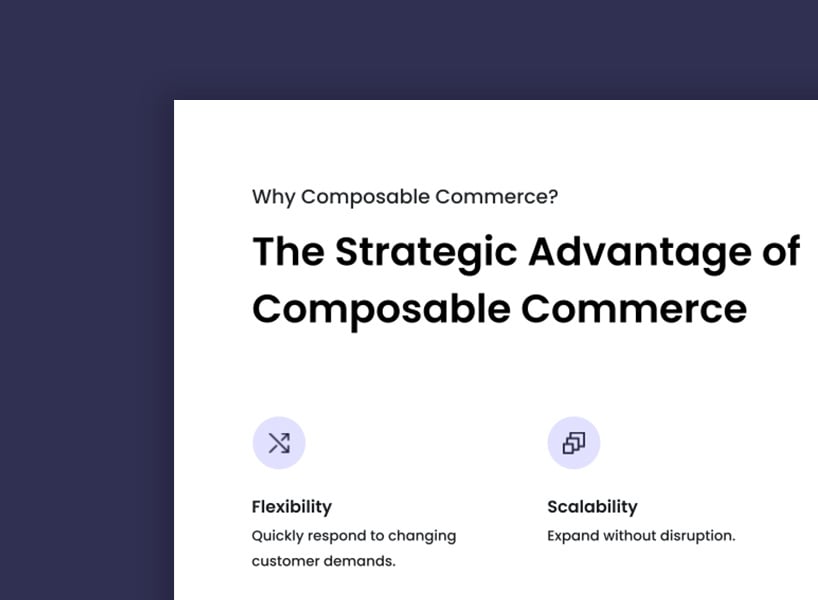
You can hop for a side for me here. Please. Awesome. So the strategic advantage of composable commerce fits into three buckets. So flexibility, scalability and integration that flexibility in composable commerce allows the B2B organization to rapidly adapt to the evolving market conditions and meet the customer's needs. So customer's needs are changing every day, and B2B platforms are typically pretty static and can't get there quickly.
00:05:54:23 - 00:06:23:14
In the composable landscape, they can actually meet the customer in real time, nearly, and be able to adapt and modify their system as the shopping experience and the needs change. This also will enable scalability. You can open up additional channels, and you can expand the digital commerce experience without disrupting your existing operations completely. Moreover, you can now move into the world of seamless integrations and technologies that are specialists in the areas in which you want to play in your B2B experience.
00:06:23:16 - 00:06:45:08
So instead of having to buy an all in one platform, you can choose the best of breed and really build out an ecosystem that properly matches your customer's needs. So for B2B companies, this means you're able to respond quickly to the customer's demands and have a personalized shopping experience, and also streamline the complexity of the transactions that we're all very accustomed to in the B2B world.
00:06:45:11 - 00:07:09:02
You want to go to the next slide, please. So addressing some of the challenges that come along with composable commerce include the integration complexity. So we've seen a little bit of everything in our history working in B2B together. And you need to be able to manage that complexity and match that complexity with best of breed tools. You also need to think about the change management that comes along with this type of transformation.
00:07:09:02 - 00:07:32:10
So you have to have it sales, marketing and customer service aligned and collaborating towards a goal that can be more difficult than the tech changes quite often. And then the technical expertise that's required from the B2B org in order to make this transformation happen can be pretty hefty. So the part, the participation from the organization and the tech partners has to be aligned.
00:07:32:11 - 00:07:54:00
There has to be a lot of communication and the intention has to be there together. So when you can address these challenges head on, businesses can successfully transition to a composable architecture and unlock that full potential. I want to go to the last slide for me here. So the essential technologies for composable commerce, there's quite a few, but we're going to categorize them as that headless front end experience.
00:07:54:00 - 00:08:14:24
So what is your customer interact with? What is that B2B buyer interacting with? AI personalization. So what is that shopping experience for them specifically? And can we tailor it at scale. And then what is the order management function happening behind the scenes. So how do we take all that complexity and make it match your workflow so that you can launch faster.
00:08:14:24 - 00:08:34:10
You can have flexibility and you can integrate to all of the systems that live behind the scenes. To make this journey possible. So it's a each of these technologies plays a really critical role. And that's what we're going to talk about today. Mike, back over to you. Please. All right. Well that does it for our slides. All right.
00:08:34:13 - 00:09:00:20
Well I'd like to kick things off here with a poll question to just kind of get our audience involved right away here in this, I'll have our producer start this question that addresses. Give me one second here. So, yeah, this question addresses digital transformation readiness. Just simply asking where is your company in its digital transformation journey? We're going to give our audience about 20 seconds to vote here, and then we'll chat about the results just a bit.
00:09:00:23 - 00:09:21:24
So you can see here that obviously this the options here aren't fully exhaustive, but we think this is most applicable to, you know, what the common situations are in distribution. You know, are you just starting to explore your digital transformation options. Are you somewhere in the early stages? Are you midway through that transformation or are you fully transformed?
00:09:21:27 - 00:09:42:18
Even though digital transformation is never fully finished, I think that last option is addressing are you well on your way or have you not started yet? You like? We needed some jeopardy music there, Mike, you know. Yeah, that's next level. We need to. So I think the answers are slowing down here. So just taking a look at these results here.
00:09:42:18 - 00:10:00:24
You know the topic is that they're in the early stages followed by midway through. Again like this is a whole spectrum of of distribution and where people are at on here. So to our panelists, just any quick thoughts on what we're seeing in this first result? I'm going to jump in and say I'm not too surprised by this.
00:10:00:24 - 00:10:26:24
And I'm actually heartened because I think part of what the pandemic did particularly, was make all of us realize it wasn't just consumers that actually really needed that online commerce experience. Having said that, and, you know, I can speak from some other personal experience, and actually making some of these orders, in a B2B context that were really, really pretty dismal.
00:10:26:26 - 00:10:46:08
My other half was trying to order some specialized pumps, as part of the microfluidics work that he does. And it was painful. It was painful trying to get information. It was painful even trying to register interest. And all he could say was, I want to give you my money, make it easy for me. And, it was not.
00:10:46:15 - 00:11:07:13
So this is one of those things where I feel like a lot of businesses, in that kind of context, have realized that they need to make a significant change. But I also suspect, and I'm curious what Becky and on the story are saying as well, that what they realized once they started going down that path is that it perhaps was a little bit bigger and more significant than they might have initially imagined.
00:11:07:15 - 00:11:35:13
Yeah. Becky and any other follow up here, I would really echo what Nicole said. We also, in commerce to see everything. We have customers who, started their transformation journey quite recently, and it's really great to see how they pivot and, how this journey looks like for them. When they start from zero and into a fully digital, you know, transformation.
00:11:35:19 - 00:11:50:26
And we have other customers as well who are not new, into, composable commerce. They just make the decision to move into composable commerce and later on. So, yeah, as well. I'm not surprised by, the results here.
00:11:50:29 - 00:12:17:14
All right. Thankfully, no one picked that they haven't started yet, so that's always encouraging. All right. So we'll have a few more poll questions as we go along here. So stay tuned. But first let's dive into just a talking point we had planned here. Want to get our panel's thoughts on, you know, how can composable commerce help distributors better manage all the complexities of B2B transactions, especially when they're dealing with large catalogs?
00:12:17:14 - 00:12:40:23
And that oftentimes involves customized pricing? So, Becky, I'd like to pitch this one to you. First, just, any thoughts on how composable commerce can make things easier for distributors, make things less complex? Certainly. So composable commerce can make it easier for distributors because you can skip over whatever part of a I'm going to use pricing as an example.
00:12:40:23 - 00:13:10:14
You can skip over whatever part of a pricing engine might come out of the box from a tool you've purchased, and you can keep your custom code in your engine and connect. Or you can purchase a secondary, even more specialized pricing model or pricing tool and have it really match your business needs. So when whenever a business started way back when they were not thinking about how do I digitize this experience and show prices in this custom way to my to my customer, without interacting with them?
00:13:10:14 - 00:13:36:03
You know, it was I have an account manager. They meet with my customer in person once a month. They do their buying, and then you know, we go from there. So very hand to hand. When you when you think about how buyers have gotten much younger now and they don't want to talk to an account manager, most often we're finding they want to digitize that first experience and then maybe see their account manager quarterly at the most is is a trend that we're really hearing a lot about.
00:13:36:06 - 00:13:55:08
So you need to be able to have a system that allows for you to pick and choose which parts you want to use. I think that's really paramount. And then the other thing on the front end of that experience is I know that my buyers are quite different in my B2B experience, so how can I customize the content that they, interact with?
00:13:55:08 - 00:14:11:06
So, you know, if I'm talking to a customer that buys, you know, at volume in the year, their content and their journey and their experience is quite different than the customer that buys from me two times a year. But I want to catch them both. And I don't want to run, you know, two full ecosystems to match that.
00:14:11:06 - 00:14:33:08
So, when you're when you're really thinking about the efficiency of that composable system, you want to think about your, your simplest use case and your most complex use case land somewhere in the middle, but allow for that kind of upward growth as well. I don't know if, if the girls here have a different perspective on it, but that's kind of a complexity that we see as a stumbling block.
00:14:33:08 - 00:14:53:13
And I have to talk people through that in the journey. I'll just pile on there and say, particularly looking at the content element of that, it requires a different way of thinking about what that continuity looks like. Because, as Becky very rightly pointed out, you've got different needs from different types of customers. They might have different sort of cycles that they're engaging with you on.
00:14:53:19 - 00:15:23:05
They might have different buying needs particularly, but there's a really strong need for consistency of content, however, and wherever you're using that, that might be in an initial kind of marketing informational type of context, it might be in a customer support context, it might be somewhere in between. So the ability to design and create these elements, whether it's content or anything else that you can create once and reuse everywhere you need it and combine and recombine as appropriate.
00:15:23:07 - 00:15:43:18
This is where you start getting to things that really begin to address this big requirement for personalization. And I think we'll probably get into this a bit more too. But there are different kinds and levels of personalization that we can talk about as well. I think this gets into the, you know, distributors are trying to figure out how to re segment their their customer base.
00:15:43:18 - 00:16:05:01
It's not just here's our million dollar customers and above, here's our $50,000 customers. There's still that to a degree. But like we've gotten into the way that customers are buying. That's adding a whole bigger layer to the whole segmentation discussion. So it's it's definitely interesting to see how distributors go about customizing, you know, the the commerce offerings that they offer.
00:16:05:01 - 00:16:28:03
These customers based on how they want to buy. So it's pretty interesting. All right. Well, if there's no other follow up there, I'd like to move on to a related question here of just what are the key factors to consider when transitioning from a, let's say, a traditional B2B platform to a composable commerce architecture? And you might be the right person to lead this one off?
00:16:28:06 - 00:16:52:11
Sure. So first of all, let's think why would a company transition from a monolithic architecture to a composable commerce one? So the and the answer is mainly to achieve better agility and flexibility in terms of key factors. It's really a variety of them. So it can be strategic technical or operational like business alignment. But let's take them one by one.
00:16:52:13 - 00:17:14:18
So in terms of your strategy, you have a very clear goal in terms of what is the experience you want to achieve. Consider decoupling your front end from the back end, enabling flexible, customer centric experiences by choosing the best of breed across different tech products. In terms of your tech, you need to ensure that the composable architecture can scale dynamically.
00:17:14:18 - 00:17:40:12
This is quite important and very, very common. So you can scale dynamically based on your business needs, whether it's handling more transactions or onboarding new suppliers in B2B or expanding to new markets. And the last one is in terms of your operations. So align on the KPIs like poster time and define pilot project. So you can test the performance and integration of individual components.
00:17:40:14 - 00:18:06:24
Because this allows you to identify potential issues and adjust the architecture according to your needs. However, in all cases, it doesn't have to be something big and complex. You don't need to go big bang. You can start small and expand later, so you can customize and tailor your migration strategy to fit your needs. And it all depends on what kinds of goals the business is trying to achieve.
00:18:06:24 - 00:18:29:06
Right? And yes, we have customers. We have done full migrations in less than six months. All right. Yeah. It's that start small message that I just no matter what technology is involved, that seems to be the advice for everyone is don't try to eat the elephant here. Start small and scale as as it makes sense. Over to Becky or Nicole.
00:18:29:06 - 00:19:01:07
Any follow up here on, you know, what's involved with this transition from traditional commerce platform to a composable architecture? I have a customer that is in the B2B space. They they're large, they're in the billions. They are a distributor in the US manufacturing and distribution in the US. And when they decided to make this transition over to composable commerce from, you know, a, I don't know, 20, 30 year legacy internal system, the start small message that Anastasia just hit on was absolutely critical.
00:19:01:07 - 00:19:21:11
And it wasn't critical just to not interrupt the system, but it was critical to get the buy in from leadership. When you go to the C-suite and they see that they're making billions of dollars, what is what is the value prop to make a change at that point? It can be so incremental. The benefit can be so incremental financially in their mind, and you don't have any proof of that yet.
00:19:21:11 - 00:19:45:04
So, using commercetools as the engine in this use case, we actually got them live on their beta version in 98 days. So for one of our most complicated customers in a B2B space with a lot of revenue at stake, to be able to pivot that and just focus on a segment, we didn't have to, you know, roll it out across the US.
00:19:45:04 - 00:20:09:06
We could say, all right, here's the key customer group we're going to test this out with. And we're going to make sure you like that transition. We're going to get feedback from leadership. We're going to get feedback from internal tech. We're going to get feedback from the customer. And then let's iterate on it. And so really having people participate and understand that very incremental roadmap, being able to control the risk and then giving leadership time to change their mind.
00:20:09:06 - 00:20:27:19
Hey, if you don't like this, we don't have to go any further. You know, you don't have you don't have, you know, $100 million of sunk cost here. You haven't affected more than 500 customers that we tested this out with. So the power of that and composable is, it you should not you should not discount how incredible that is.
00:20:27:19 - 00:20:50:23
Think of back in the day of old SAP migrations, where you just want to make a change to part of SAP, and no changes could be made to the current system for two years. The big bang approach. Anybody else scarred by that? Yes, exactly. I just want to echo this idea of iterative and incremental change. I think it's really difficult to overstate how important that is as an approach.
00:20:50:23 - 00:21:19:27
And as Becky pointed out, it's really critical to risk mitigation as well. The other thing I'd say is backing up even more before you start. I think one of the things that is so fantastic about this new approach, this composable approach, is that you can actually benefit a lot from building proofs of concept. And one of the things that I think both, both Anna and Becky touched on is this idea that it's sort of hard to fully imagine what this is going to be like until you have something tangible in front of you.
00:21:19:29 - 00:21:43:23
And I think that kind of mindset change, you can almost watch it happen in teams as they have an opportunity to experience this, but it doesn't have to happen only once you start doing the actual implementation. I mean, the proof of concept approach, even in the earliest phases of trying to assess which tools and combinations you want to go with is an equally critical part of making that whole process happen.
00:21:43:23 - 00:21:59:21
And I would argue, really starting to accelerate it because, you know, it's kind of like there are some people who can imagine what a fixer upper is going to look like. Most people really can't, you know, they can't really see that potential until it's right there in front of them. And I would argue the same is really true of these systems as well.
00:21:59:26 - 00:22:25:09
So having something tangible that you can number one, test and see if it's going to work the way you want it to or the way you expect it to. Are you adequately counting on all of the different inputs from the different stakeholders and teams that have a vested interest in, and will ultimately be working within these systems? You know, all of these are things that you can really test out in a far more impactful way, before you even get started.
00:22:25:09 - 00:22:48:28
And I think that also helps to dramatically accelerate the results once you do. Yeah, yeah, that risk management element is so crucial here. And just having test cases, I don't care how good your IT team is, things get overlooked, things get underestimated overestimated. So having those, you know, those test cases before you really start rolling things out, definitely critical here.
00:22:49:00 - 00:23:08:04
You're not going to be able to find all the answers just from RFPs. And you might not always even have the right questions in the first place. All right. So I want to let's let's get another poll question involved here. So if we can have our producer start this one that addresses, give me this always pops up in front of what I plan to say.
00:23:08:07 - 00:23:32:22
So this this question addresses, you know, the just the biggest challenges involved in B2B commerce. It just asking pretty straightforwardly, what is the biggest challenge your company faces in B2B commerce today. So same drill. We're going to keep this up for about seconds and we'll discuss the results. And again, while this isn't a complete list of all the challenges that can be out there, we're just asking you to pick the one that's most relevant to your business.
00:23:32:22 - 00:23:59:14
So that's it could be integration with legacy systems, personalization, managing complex transactions, aligning internal teams during this digital transformation, or meeting customer expectations for seamless digital experiences. I'd say as well, if you have any right hand votes, throw them in a chat. We're eager to hear what the real challenges are, and we haven't capture them on the pole here.
00:23:59:16 - 00:24:19:08
So I believe this. All right. So I think we've closed the poll, and I think we're going to check out the results in just a second. All right. So we're seeing a fairly even distribution here. And again I want to defer to our panel here to see if that's, you know, any surprising. Were they expecting one of these to be more than the other.
00:24:19:10 - 00:24:48:13
So whoever wants to dive in here, what are these results telling you? Zero surprise for me on the equal distribution. Because when I read the questions I was like, oh, that one. Oh oh no, that one. Oh. So it felt it felt like all of the very common challenges, integrating new technologies with legacy systems is catching my eye simply because, I my experience when I'm working with a B2B customer is that the knowledge lives in one person's head.
00:24:48:15 - 00:25:18:03
So when you're embarking on your B2B commerce journey and you're going to move to composable, you're going to start to work within SI, potentially you have to have your data ready and exposed. So what format is it in? How is it documented? Who else is trained on it? Try to get a couple a couple of sprints ahead, even if it means you kind of have to pause your transformation to focus in on how do we get our internal teams ready to expose that data?
00:25:18:05 - 00:25:40:16
I think that that's probably it's it. We often are waiting for our customers to get to that step in a sprint. And so we're pulling in tickets that are not as valuable because they're not ready to expose the data to us in a format that we need, no matter, you know, how many sprints ahead they've known. So, I would say that that one is the most expensive one, for customers when they're actually into the transformation.
00:25:40:16 - 00:25:48:28
But curious to hear what Anastasia and, Nicole have to say.
00:25:49:00 - 00:26:13:16
I wasn't surprised either, to be honest. We've seen everything over the last few years, as I mentioned earlier. And, the last couple of years, really, the pressure on many companies to really, move, fast, on that. So, yeah, I was just kind of I was going to chime in here with, with the write an answer that we got from Michael Gallagher.
00:26:13:16 - 00:26:41:10
So thank you. Michael. He says our biggest challenge is getting high quality content from our vendors so that our presentation of their products is world class. And this is, boy, this is a big one that we see in all kinds of B2B. I mean, interestingly, even retail, I was actually having this conversation with, Sephora not too long ago because particularly where you have regulated products, those descriptions actually have to pass legal review.
00:26:41:10 - 00:27:11:12
So if you're distributing or retailing products that come from some other organization, having that high fidelity and high resolution of of information that you're sharing can often be a big challenge. And I think that's one of those areas where we're we're just at the edges of what we I think we'll begin to see in the not too distant future where that composability really extends across organizations more as well, because, again, this isn't really a technology limitation.
00:27:11:15 - 00:27:40:01
Particularly when we have API based architectures that make it much, much easier to bring in content and data from other systems, even potentially outside our own organization's boundaries. I think we're going to begin to see some really significant changes along those lines. But there's there's a certain degree of adaptation that I think our organizations need to make in the first instance in order to be receptive and open to taking that next step.
00:27:40:03 - 00:27:59:25
And I think it's also possible that people in our audience might have they might consider multiple these options, you know, a big challenge for them. So keep in mind, when we have these polls, we're just asking you to pick the one that you know most resonates above all else. But it's definitely likely that people are dealing with multiple options here all at the same time.
00:27:59:28 - 00:28:25:23
All right, all right. So let's move on to our next planned talking point here, which is kind of about just given the rapidly changing digital landscape here, how can distributors ensure that their composable commerce strategy remains agile and adaptable to future market trends? So I think we're just asking, how can distributors just keep rolling with the market trends here and make sure that their commerce is adaptable to that?
00:28:25:23 - 00:28:47:09
So I'm going to defer to Anna here because I think you might be the best to lead this off. Sure. So going back to what we mentioned earlier, the short answer is incremental innovation. You don't want to do big bang, as we already mentioned, start with a POC or an MVP and use technology as an enabler to do that.
00:28:47:12 - 00:29:13:15
What does that mean. So let's make it more tangible. So start with one market spot with, one language, one currency, with one geo experiment and fail fast and then evaluate. And what should we really evaluate? Right. You should evaluate whether can you scale if a pilot successful? What do you do if an experiment is wildly successful? How do you scale it out and prove positive?
00:29:13:15 - 00:29:44:17
Revenue generation? Is your technology allowing you to fail fast? Do so without making any massive investment. And how about the time your teams are spending on maintenance and upgrades versus netting you work? Can your business impact effectively evaluate new opportunities and how they impact your revenue growth? So these are the key things to consider I would say. But overall, the commercial strategy should support the overall business strategy.
00:29:44:19 - 00:30:07:24
And that really requires both clarity and, vision on an organizational level. First, that's yeah, that's a good note. It's not just doing technology or doing commerce for commerce sake. There has to be exactly the end goal behind this. I think the two to back you're in a call and you follow up here on, you know, just adaptability in composable commerce.
00:30:07:26 - 00:30:26:13
I'm sure Becky has thoughts on this too. I'm going to jump in on that. I feel like this is this is really sort of the spirit of what we're after with this composable approach. And I know there's a question that we can tackle shortly to and what that actually means. What does composable mean? Because there are a number of different connotations here.
00:30:26:19 - 00:30:50:28
But I think really what we're talking about is facilitating much easier integration and an incremental adjustable approach. And, you know, I know you talked about this, this adaptability here. The idea that as organizations, we have a vision for how we want to operate and sometimes some very clear and often very immediate business objectives that we need to help execute on.
00:30:51:01 - 00:31:17:22
And this is about being able to adjust your priorities over time and to have those priorities, the ways you want to work and the the system and workflows beneath that to support those ways of working in those priorities rather than dictating that. So, you know, this is this is really a question of having, a different type of operational approach ultimately, and that is reflected in the systems.
00:31:17:22 - 00:31:46:10
It also needs to be reflected in the organization and the way different teams work together. That kind of collaboration that happens to work toward that shared business objective and sets of priorities, I, I have I have a like a very firm belief about, about this point. So your composable commerce strategy can remain agile if you don't try to just rebuild what you already have with new technology.
00:31:46:12 - 00:32:11:04
What a huge waste of money. If that is your plan from leadership down to the people in the project, don't do it. You will not get any value. You will be frustrated. It will be more complicated and more expensive. So if feature parity is a term that you're using over and over and over again in your RFP cycle, in your planning cycle, in your delivery, if it's what you're telling your Si, you are not a fit for composable commerce.
00:32:11:07 - 00:32:32:09
The features that you will be able to access for your customer and your business users through this tooling will be much better than what you have, but retraining to use them will be very painful if your mindset isn't there. So what is your company's ideology? Who is preaching it? How far up the chain does that desire to change go?
00:32:32:11 - 00:32:47:11
And then how is it happening in real time and how it happens in real time is I get customers that always say, well, tell me how much this is going to cost to be done. How long is a piece of string? I don't know what is done to you. That's the first question. And what is good enough to launch.
00:32:47:18 - 00:33:07:11
And then composable commerce and agile combined means you should be launching every two weeks at the most, or at the least. So my B2B customer that I was talking about earlier, they launched every day for a few weeks because that's the level that they got to where they were like, we can release these tiny features and we can keep leadership excited.
00:33:07:11 - 00:33:30:13
So the ideology really matters. Remaining agile, you can't just say it. You have to live it and breathe it. That comes along with a lot of trust, with the team that you're having to deliver for you. That comes along with a lot of transparency about how your money and time is being spent. So, yeah, if you're trying to just rebuild what you already have, then it's probably not a good fit for your for your organization.
00:33:30:13 - 00:33:51:16
Culturally. I want to pick up on that because that to me is a huge, huge point. And, you know, I don't think any of us ever wants to discourage a would be customer. But at the same time, if you're not in a position where you're ready to make a significant change, really, really consider whether you want to go down this path, because the answer might be at a minimum, maybe not.
00:33:51:16 - 00:34:09:21
Now I want to share an example, though. That kind of points to what Becky is saying about the dangers of replicating what you have, but also kind of comes at it from the perspective of how this composable approach actually helps to address the practical, messy, real world that we all inhabit. Right? I mean, it's not ideal. We know that.
00:34:09:21 - 00:34:33:12
And that's part of the challenge with making all of this stuff work effectively. So we have a customer who implemented Contentful as the core of their system from a content perspective. And, they were implementing commerce and a variety of other, capabilities at the same time. What they did when they started modeling their content is they basically adapted what they'd had from their previous system before.
00:34:33:12 - 00:34:53:01
And it was interesting because what that meant was they had one content model for all of the products they were selling for the web, and a parallel content model for all of those same products in the mobile app. And you could look at that and think, you know, to Becky's point, why on earth are you replicating what you already had before?
00:34:53:04 - 00:35:23:00
And the answer was, not necessarily good, but it was very practical, which was they had two separate teams that were responsible for managing the product catalog in those two different channels, and it was far easier for them to start by building a content model that reflected that organizational divide. And then over time, they rationalized the teams and they consolidated that in their content model rather than tackling the very, very thorny political issue of a reorg at the time that they were starting to do this implementation.
00:35:23:06 - 00:35:42:17
So I think, again, kind of a glancing blow at answering the question about, you know, trying to make this idea of composable a little bit more concrete. This is what you can do because you have systems that are designed with a high degree of flexibility and adaptability, and the rate of change is really up to you to decide.
00:35:42:23 - 00:36:11:29
And I think in this case, it was a type of change that really needed to happen at the pace of organizational structural change and not just technology implementation. I want to bring in this comment from Michael, because I think it shows up our next talking point. You're pretty good. Michael says the industrial market is dominated by many old industry companies who are not enthusiastic supporters of ecommerce because of their old ingrained but often obsolete channel models.
00:36:12:01 - 00:36:34:22
And it definitely gets into this notion that B2B distribution is a slow moving, slow adopting industry when it comes to technology and just digital innovation here. And this was especially apparent at MDM shift conference. It was about it's a mindset shift as much as it is, you know, getting the right tech savvy people in place. It's definitely a leadership mindset.
00:36:34:28 - 00:36:59:11
Part of the equation here is so crucial here. And our next talking point here, I want to dive into is what are the best practices for integrating existing legacy systems with new composable commerce solutions without disrupting ongoing operations? So it kind of gets to this point of, you know, distributors don't change as hard for distributors. They don't like to rock the boat of, you know, what they've been doing for years and years.
00:36:59:18 - 00:37:25:15
But if they're interested in exploring this, how can they, you know, avoid it disrupting so much of what they're doing while digitally innovating with, composable commerce. So whoever wants to tackle that one, please dive in. Okay. I'm looking at you. I know it's a it's a really big it's a really big question. So, Michael, you're very right.
00:37:25:17 - 00:37:51:05
B2B has been built, in a very specific way around humans, not around technology. So there's there's two parts to my answer there. One is to Anastasia's previous point, do it incrementally. Incrementally can mean do it Greenfield. Don't connect to any of your old data. Do it with one product, totally greenfield. Prove out the technology and then show leadership.
00:37:51:05 - 00:38:17:22
Here's how much money I made off that. The other tactic, which can be more uncomfortable, is show how a SaaS product can basically take down your operational costs significantly. So year one, year two, you're in a digital transformation. This is not going to be cost savings. Year three how many less people do you need to perform that swivel chair function?
00:38:17:24 - 00:38:46:07
So this can be a really uncomfortable exercise for some organizations. But you can retrain transition talent, move around where those resources work and live within your organization and create some pretty significant efficiencies through this type of change. And that's that's the other talk track that leadership truly responds to. I'm working with a customer right now. They had they sell product, but essentially they're a tech company.
00:38:46:07 - 00:39:17:00
They have no physical operations. You know, they do about $400 million, a year online. So significant bit of revenue. And they have a 250 person tech team. They want to move to this ecosystem of composable commerce. That means that a lot of people's jobs and roles are going to change. So being able to model that cost change to leadership is, is one of the more effective ways to to talk your stakeholders into why they want to listen to you.
00:39:17:02 - 00:39:42:13
So I know I kind of skipped over the legacy system. So integrating your legacy systems is part of that. But what's the mentality around them? How much are we willing to toss out because it no longer serves us? Where do we want to move that new data hub to? What do we want to do with inventory? This is like one of the biggest pain points that we see where people actually understand because they experience the pain point of it, Black Friday, Cyber Monday.
00:39:42:15 - 00:40:09:17
What's going on with your inventory? Where is it? How's where is it integrated? How real time is it? Do we want to keep it in a legacy system that fails on us every year? Do we want to move inventory into more composable and premium system in real time that integrates to all of our other platforms? So it's really understanding your business model, understanding your pain, understanding your politics, and then doing some cost modeling and thinking to yourself, what is my best foot in the door here with leadership?
00:40:09:19 - 00:40:24:26
How do I get them to buy into this? And what kind of budget and domain will they give me to play and experiment and prove? That is small and safe for all of us, myself included. Because if I'm going to be the person who's leading this transformation, I want it to be safe for my role as well.
00:40:24:26 - 00:40:44:29
I want to be able to prove, success. So, I don't know if that was a very helpful answer to the question, but, Yeah, Michael, you're right. It's it's tough. And there's a couple of ways to approach that conversation. And I know we'll get into the ROI side of things a bit later. But yeah. Anything any other feedback on this?
00:40:45:02 - 00:41:13:12
You know, integration with legacy systems component. Yeah. I mean, coming back to something, Becky, you talked about with, with, you know, the kind of year three and shifting in terms of what you can support and what what kind of, personnel needs you might need, the equivalent set of capabilities or requirements. I think one of the areas that we see quite consistently as well is that customers who take this approach are actually in a much, much better position to support growth.
00:41:13:14 - 00:41:43:17
So there's not the same need to grow headcount in the same way with business growth, because your teams are considerably more efficient and all of your teams because you're talking about your merchandizing and your commerce teams, you're talking about your content and your marketing teams. You're talking about your development and engineering teams. And I want to use that as an opportunity to tackle a question that came in about, composable commerce seeming to allow for greater flexibility, but putting a larger overhead for developers.
00:41:43:19 - 00:42:05:19
Or third party integrators. It's an interesting question, and I would I would frame it slightly differently, because I think one of the big issues that we see is that it's about shifting the type of work that development teams are doing. If you look across most traditional dev organizations today, what you will find is I'm just going to take the content piece alone.
00:42:05:19 - 00:42:34:24
And that's before we get to any of the commerce capabilities, content alone. Dev teams typically face a massive backlog of what is essentially content changes. There's no actual demanding coding involved. It is literally just changing the content. And that causes a weird kind of codependence because it means, you know, merchandizing or product teams, marketing teams, they are really shackled because they are absolutely dependent on development to actually make those changes.
00:42:34:26 - 00:42:54:15
Meanwhile, the dev team is stuck doing stuff that, frankly, is pretty darn boring and they're not super excited about doing so. You can look at that from a backlog standpoint, and so you can actually eliminate that backlog, because what you can do is empower those teams who have responsibility for that content or for other capabilities elsewhere in the system to be directly managing that.
00:42:54:18 - 00:43:16:29
And that means you're completely alleviating a huge, significant amount of development work and, frankly, low value development work. What you can now do is focus on giving your development team some really interesting areas to innovate in. You know, they become devs that are working on digital products, not just tackling a backlog of changes to the website, for example.
00:43:17:01 - 00:43:46:08
And that might not, at face value, seem like something that is a line item cost benefit. But the impact of that is really difficult to overstate. You are now shifting the kind of work that you're asking developers to do. And in a lot of cases, and we know from many of our customers as well, this is what changes the equation, making that a desirable job and making it easier to attract and retain the talent that you actually want and need in order to be really effective in doing anything online.
00:43:46:10 - 00:44:17:19
So much of the discussion is always about how hard changes. But change also does present opportunities like this. And it can really put position your workforce into, you know, the trends that people are looking for when they when it comes to, you know, things like that. So let's tackle or sorry. Go ahead. I have I have one more, thought on the end of that, that question where it says, if a monolithic option exists and handles our current business needs versus needing customization through composable tech stack, what are the advantages or disadvantages of each?
00:44:17:22 - 00:44:38:29
If a monolithic option is built for your industry, they're probably going to continue to release development that will match your industry and how it changes. So sometimes that is a good option. You know, we have drank the Kool-Aid in this room. You know, we work in composable commerce. We don't know every in and out of each industry and the monolithic options that are available.
00:44:38:29 - 00:45:00:28
So, how you can apply some of this thinking, though, is what will the industry look like in five years? And so in composable commerce, I like to say that you can date your technology. You do not have to marry it. You know, monolithic system. You're getting married. It's going to be an expensive divorce. So maybe it's a combination of the two.
00:45:01:04 - 00:45:24:00
We see success in an incremental fashion where parts of the monolith are kept, and then a small bit of a composable ecosystem is introduced. Customized creates a lot of revenue. And if in 3 or 5 years you don't want it, you toss out that one little bit and you replace it, and that's completely fine. That is what it's built for.
00:45:24:02 - 00:46:02:23
None of us could have predicted the way that I would have already influenced and enabled the ecosystem in ecommerce. And so if your monolithic system didn't have that foresight as well, you're probably already behind. It doesn't mean you need to toss out the whole system, but there will be sections of it where you would make more revenue and have less hands on keyboard if you just replaced it with something that was adaptive and ready and AI enabled and had a whole product team focused around that, that could be the difference between, you know, two 3% revenue annually, which could be funding your entire digital transformation.
00:46:02:26 - 00:46:23:08
All right. So I think we're to get to another question before we do another poll. And we've already touched on the element of personalization here. But getting a little more into the weeds. How does composable commerce enhance personalization and what impact can this have on customer satisfaction and retention in the B2B sector? So anyone want to tackle this?
00:46:23:08 - 00:46:56:24
To dive a little bit deeper into this personalization element and how composable commerce drives that forward? Oh, I can jump in because we've actually just made an acquisition that that, tackles this very question. A company called Nine Tailed, it's interesting going back to what Becky presented at the very opening here on the slides. I think it is absolutely crucial for us to remember that our experiences as consumers absolutely inform the expectations we have as B2B buyers.
00:46:57:01 - 00:47:31:20
And when it comes to things like providing that contextual personalization, where am I in my relationship with you as as the seller organization? What have I bought from you before? What kinds of priorities do I have? What issues or challenges have I had in the past? All of this is actually really critical aspects of of personalization, but also things like how you present information to me, what you're presenting to me, understanding and reflecting where I might be in a decision process and recognize that I might have different things that I'm doing in different contexts at the same time.
00:47:31:20 - 00:48:08:14
You know, especially if this is, kind of long term relationship between, buyer and vendor. You know, I may have a customer service issue that I'm dealing with on one hand, but I actually have other things that I'm in the middle of trying to procure at the same time. So I think part of this is how can we understand and recognize that complexity, number one, that variability, but also how can we understand where not only different organizations, but individuals within those organizations may have a variety of needs that we need to support and address at even one moment in time?
00:48:08:17 - 00:48:27:22
And a lot of this is about how we manage the customer information more effectively, but a whole bunch of it is how we understand what kinds of things we're presenting, in particular channels and particular kinds of context or relationships. You know, what is the state of the person that we're interacting with on digital channels? Are they signed in?
00:48:27:22 - 00:48:52:05
Are they someone we know? You know, is there a quote out to them? All of these are the kinds of things that I think really make some material differences in how we can think about personalizing, and it really is an opportunity to provide that kind of 1 to 1 approach and not just, an account specific approach, but something that that potentially can be way more engaging and successful than what we might have considered state of the art before.
00:48:52:08 - 00:49:01:28
Sure. Any other thoughts on, you know, composable commerce driving personalization forward?
00:49:02:01 - 00:49:29:21
Every tool in the composable ecosystem is talking about personalization, and I find out what it means to you which ones are actually valuable to, drive revenue in your business, because right now it can also be a bit noisy and a bit distracting. So buckle down on 1 or 2, not ten. And, see what see what your organization is capable of, actually leveraging because it takes work on both sides.
00:49:29:23 - 00:49:48:21
And then be realistic about having devoted teammates that will grow it and monitor it and pay attention to it. You know, daily, I think that that's probably where where I see a lot of customers fall down is they buy the tool and then they think magically it's going to do something for them. So don't go buy ten tools, you know, focus on 1 or 2.
00:49:48:23 - 00:50:03:04
Most have AI enabled personalization, some some version of it already in there, and think small, watch the revenue and then just discover with your org, what's making your money and where you should grow it.
00:50:03:07 - 00:50:23:04
All right. We got about ten minutes left, so we'll see how much, just more kind of talking points we can get through here. But I do want to insert another poll question here. So if our producer can get this one up and running, this one addresses, just investment priorities with the question of which area are you prioritizing for investment in the next 12 months?
00:50:23:06 - 00:50:41:22
Again, multiple these might apply to you, but please just pick the one that maybe stands out the most. As far as your priorities. So once again, get your votes in and then we'll discuss it a bit. And of course, this again is not a complete list of investment options out there, but just maybe the ones that are the most likely candidates.
00:50:41:22 - 00:51:07:29
So there's customer experience and personalization like we just touched on. If I.T infrastructure and system integration, data analytics and AI driven insights, order management and fulfillment efficiency, and then digital marketing and omnichannel strategies. So we'll keep this up for a few more seconds, and then we'll close and examine, and then we were getting some great audience questions along the way here and keep those coming.
00:51:07:29 - 00:51:32:25
And I think we'll pause in a second. Try to address one of these. But first, let's take a look at these results. Again, a fairly even spread here in terms of investment priorities. Anyone want to chime in on, you know, what this result is telling you? It's nice to see that omnichannel marketing isn't just for B2C. You know?
00:51:32:28 - 00:51:55:07
I'm surprised. Order management is is, on the lower end because it seems to be about 50% of the project inquiries this year to date has been around order management, and I can't tell if people are going to do it in Q4 or if they're talking about it and planning it for Q1. So that one surprises me a little.
00:51:55:09 - 00:52:21:08
And again, it's a small sample size here. I think there's only a little over 20 votes here. So it's kind of hard to extrapolate some hard, you know, analysis here. But yeah. All right. So let's move on to this question of or I guess, and I think I'd be interested to get any, you know, just thoughts from you on this or question of investment priorities.
00:52:21:11 - 00:52:52:08
So I think you mentioned that you had some thoughts here to share. Yes. So this is very interesting because we asked this question the same question to a group of more than 200, executives for B2B, in conjunction with our master B2B. He met earlier this year, which we also published in our Accelerating Your Digital Vision report, and 83% plan to increase the investment in digital tools for B2B ecommerce this year.
00:52:52:10 - 00:53:23:16
And the top priorities were ecommerce platform, backend integrations with Europe and OMS. So I was a little bit surprised that OMS was not, in the on the top list. Like, they keep, commented earlier. But yeah, it's really interesting to see these, answers. It's particularly challenging on a, on the order management if you're selling across multiple channels to and I know that is one specific area that often causes a whole lot of difficulties.
00:53:23:19 - 00:53:47:03
We see a couple questions actually around Amazon here in the chat. And that's where the power of order management I see can be hugely beneficial. And it always comes down to inventory. When for for my customers anyway when dealing with Amazon. Amazon, if it's a big part of your org strategy and you're making a bunch of money off of it, that is amazing.
00:53:47:03 - 00:54:12:02
Where composable commerce comes into play is keeping that data, those products in that inventory, in sync between all of your channels. In the extreme case where I've seen a customer oversell on Amazon because they didn't have the right maturity of inventory tool in place in their stack, they had their own, you know, inventory API that was not keeping pace.
00:54:12:05 - 00:54:41:04
I saw them get the penalty from Amazon where they shut down their ability to sell on Amazon. And this took down the revenue by like 40%. It was the game changing for them in a very negative way. So, when you think composable commerce, you can think of basically any tool that is purpose built, that integrates into or out of or together with multiple systems, it doesn't just have to be the ecommerce engine and the content and the headless.
00:54:41:04 - 00:55:05:06
It can be as big as order management or as slim as inventory. It can be promotions as a standalone, it can be pricing as a standalone. So whatever empowers you to move quickly. But with data accuracy, I would say probably helps your case for selling on Amazon. I want to pick up on that too, just because, sorry Mike, I think this is a really interesting one.
00:55:05:06 - 00:55:34:02
And it goes back to something both Anna and Becky have mentioned and other parts of this conversation, which is, you know, there are the tools, but there is also the strategy. And I think competing effectively with Amazon is very much about a strategy and having the tools to help you quickly execute on that. I think there are probably a lot of elements we could we could break down about what makes Amazon, appealing and successful in selling to to B2B buyers.
00:55:34:04 - 00:55:55:18
And there's a lot of that that can be adopted through composable commerce, and a composable architecture approach more broadly. A lot of it comes down to what are the things that matter most to your customer base, and how can you maximize those aspects of the customer experience. And I think there's a tremendous opportunity. I mean, I honestly, I don't think Amazon is necessarily all that great.
00:55:55:20 - 00:56:18:19
I think what it has really going for it in a lot of cases is it's easy. It's easy for a buyer. And I think there's a huge opportunity. And again, I'm sure Becky and Anna both have some really good comments on this too. But I think there's a huge opportunity to exploit a better understanding of who your customer base actually is and bringing some of these capabilities to the fore.
00:56:18:19 - 00:56:40:03
But if you can combine that with making it easy for the buyer, there's there's a tremendous amount of value to be had there. All right. I think we're going to get one more good talking point in here. I mean, I feel like we could easily stretch this another hour and still not get through it all. But so like, let's say people are on board possible commerce.
00:56:40:03 - 00:57:03:10
It sounds like there's a lot of advantages. Let's get into the specific challenges, all that that, companies might face in terms of their change management when adopting a composable commerce approach and how they can overcome them. So, Anna, I think you're probably geared to answer this best. You know, what are the biggest challenges or most common challenges that companies might face in terms of change management?
00:57:03:10 - 00:57:34:22
When, you know, moving into composable commerce with one word organizational changes? So they transition from a monolithic platform to a composable architecture doesn't require undue tech changes. Of course, the most challenging part is to shift the mindset of the culture in the organization. We really touched on this, point, earlier. So of course, aligning teams across a common goal and vision is the quick answer to this.
00:57:34:24 - 00:58:02:07
But the key point here, I believe, is to find partners in crime within the organization to speed up the process in order to achieve, rapid return on investment. So, for example, when you are rolling out a new ecommerce channel, make the head of sales your partner in crime to help them understand what your goals are, what their goals are, and how the success of the MVP or the possible running will help both of you.
00:58:02:10 - 00:58:30:24
For example, with these new policy, we want to reduce by x percent the time spent on both generated manually. In a nutshell, the economic climate is admittedly tough, so getting early customer feedback, failing fast and evaluating the return on investment is really the key. I'd say, this we estimate in the near future will become even more important and aggressive, especially with the role of AI.
00:58:30:26 - 00:59:02:08
So we'll really, we will really need this kind of mindset in order to shape, the solution. That's great. Any other quick follow up here on just the challenges of change management when, you know, moving forward with composable commerce, one of the strangest ones that always rears up that I see is, customers that are going through this transformation identify as, developing in an agile fashion.
00:59:02:11 - 00:59:32:04
And then we come in as an SI and we discover that it's waterfall or y trial. And so understanding your PMO, ideology and being honest with yourself about that one is not bad or wrong. It's just about how fast you can move and, and really understanding that organizationally, can, can make the change management easier. So, just a little pain point that, that, that I feel is a rock in my shoe.
00:59:32:11 - 00:59:56:24
Often I'm stealing. Wow. Dile, Becky, I think that's awesome. All right. Well, there's there's so much more that we could go deeper with this discussion. And if you certainly if you want to get more commentary on this topic, I know you can reach out to our three sponsors here. You can follow up with our panelists here. And I'm sure that they would love to share more thoughts on, you know, the ROI equation, more case study examples.
00:59:57:01 - 01:00:28:14
But we are at the top of the hour here. So we're going to start closing out. And that's going to essentially close up our conversation here on the topic of mastering ecommerce strategies to drive growth in B2B distribution. So Nicole, Becky and Ana, I really want to thank you for sharing all your insights here today. It's been fascinating to watch this conversation around B2B ecommerce go from just how to implement it, which kind of seems to be in the rearview mirror to how to scale and much more optimize it.
01:00:28:16 - 01:00:52:21
And then even that's becoming kind of a past tense item today, as we touched on, distributors are all about fine tuning it and figuring out customization and enhancing that customer experience that involves with their digital commerce. So they're really driving into the strategies and architecture of the technology. And I think this discussion here can just help really drive that forward.
01:00:52:24 - 01:01:15:28
So we did cover a lot of ground here. And before we sign off real quickly, I'd like to ask if any, you have any real quick final thoughts. Parting words that you want to share with our audience. So, Nicole, starting with you, I would just say, change is always, challenging. Sometimes it can be a little painful, but I think this is a change that is is well worth making.
01:01:16:01 - 01:01:45:03
Becky, over to you. B2B customers think that they are more unique than they actually are. Look to your experience as a shopper in the B2C world and know that you can replicate that if you want. Erin. Good. And Anna, anything out of you? Yeah, composable doesn't have to be complex. There are plenty of different sized and completely new digital organizations that you've been able to get started in just a few months.
01:01:45:05 - 01:02:13:14
So ultimately, composable commerce can support any kind of business goals, as long as the business itself is the clarity on their vision and what they want to optimize. Yeah, vision is absolutely crucial here. Well, excellent. Thanks again to all of our panelists for sharing their experience today. And with that, I'd certainly like to thank Oregon commercetools and Contentful for their sponsorship of this program and everything they do to help distributors with their ecommerce or composable commerce journey.
01:02:13:17 - 01:02:33:10
And of course, I want to thank everyone in our audience who tuned in to watch this live or on demand. We this is has been recorded. So like I mentioned in the intro, we will send an on demand recording link of this program to all registrants in just a bit. So thanks again all around. I hope you learned or gained some valuable insight from this webcast.
01:02:33:10 - 01:02:41:16
And that concludes our program. Thanks for watching.
Meet Our Speakers

Becky Parisotto
VP, Retail and Commerce Platform at Orium
Becky has over 13 years of experience in ecommerce client services and program management. She leads Orium’s Digital Programs line of business, including in-store technology, loyalty programs, and customer data activation team at Orium. Orium is focused on large-scale digital composable commerce projects for the retail space, bringing omnichannel technologies together. Key accounts that Becky works with are Harry Rosen and Princess Auto in Canada, and SiteOne Landscape and Shamrock Foods in the USA.

Anastasia Drougka
Staff Product Manager at Commercetools
Ana Drougka is an experienced E-commerce Functional Lead/Functional Architect (SAP hybris, Salesforce Commerce Cloud and Adobe) with industry experience across Retail, FMCG, Energy and Publishing. Delivery focused, and analytical thinking professional, liaising with business and technical stakeholders to deliver valuable software designs and process changes. She is highly adept at and comfortable breaking down technology projects into manageable and controllable stages, coaching junior BAs and trusted for building excellent interpersonal relations. She holds a Bachelor of Science degree in Technology Management from The University of Macedonia.

Nicole France
Chief Evangelist at Contentful
Nicole France is a passionate customer advocate evangelizing new ways of thinking about content and organizing the work of digital business. It’s the wave of the future — and her mission is to make sure everyone knows why. She brings the perspective and critical thinking of an industry analyst and the first-hand experience of a practitioner. Before joining Contentful, Nicole worked as an analyst at Constellation Research and Gartner. She also held a variety of strategy and marketing roles at Fujitsu, Equinix, ITSMA, and Cisco. A graduate of UC Berkeley, Nicole enjoys the outdoors, flying small planes, and embarking on yet another house project in her spare time.
Brought To You By
.png?width=170&height=41&name=OR%20-%20Orium%20Logo%20-%20Orange%20(1).png "Orium Logo")
Orium is the leading composable commerce consultancy and systems integrator in the Americas. We help forward-thinking brands adapt, execute, and scale through modern commerce. With over a decade of experience in creating custom digital programs, we work closely with best-in-class technology partners to bring modern commerce experiences to life as a member of the MACH Alliance.

commercetools, inventor of headless commerce, is a digital software provider that empowers organizations to embrace innovation and thrive by providing flexible APIs that enable an agile, customizable commerce infrastructure at scale. Relied on by some of the world’s most iconic brands, commercetools enables continuous innovation by connecting digital channels to physical stores, and optimizing every new channel, from in-car and video content to AR/VR and voice to IoT-enabled machines, as well as future devices yet to be developed.

Contentful is a leading composable content platform that unlocks all of an organization’s digital content to deliver impactful customer experiences, making content a strategic business asset. The Contentful Platform, Contentful Studio, Ninetailed by Contentful and the Contentful Ecosystem combine the flexibility of composable content with the intelligence of AI, empowering digital teams to drive business momentum through collaboration, speed, and scale. Contentful powers innovative content experiences across brands, regions, and channels for organizations of all sizes around the world.